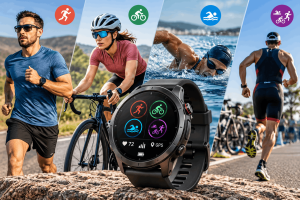
Choosing a fitness watch for running, cycling, swimming, or triathlon starts with matching the watch to the sport decisions you actually make. The right device is not the one with the longest feature list; it is the one that tracks your key sessions accurately, fits comfortably, and gives data you will use.
Quick takeaways
- Runners usually need GPS, heart-rate trends, workout structure, and recovery context.
- Swimmers and triathletes should check water rating, multisport mode, battery life, and button usability.
- Budget buyers should prioritize accuracy, comfort, and sport modes before premium extras.
Start with the sport, not the spec sheet
A watch that works for a casual 5K runner may be frustrating for a triathlete who needs open-water swim, bike power pairing, transitions, and long battery life. Manufacturer guides such as Garmin’s watch selection overview and Apple Watch workout support are useful starting points, but buyers should still map features to their own training week.
This is where many shoppers overspend. A first-time runner may not need advanced running dynamics. A swimmer may care more about pool length settings and button controls than music storage. A cyclist may need sensor compatibility more than a bright lifestyle screen.
Feature comparison by athlete type
| Athlete type | Highest-value features | Nice but not essential |
|---|---|---|
| Runner | Reliable GPS, structured workouts, heart-rate trends, recovery notes. | Advanced running dynamics, maps, music, payments. |
| Cyclist | GPS, sensor pairing, battery life, navigation prompts. | Full-color maps, training-readiness scores. |
| Swimmer | Water rating, pool and open-water modes, buttons. | Detailed stroke analytics if basics are solid. |
| Triathlete | Multisport mode, transition support, long battery, durable buttons. | Premium materials and race-day extras. |
Accuracy, comfort, and data overload
Wrist optical heart rate is convenient, but it can vary with fit, skin contact, cold weather, and rapid intensity changes. GPS can also vary near tall buildings, trees, or tight turns. Treat watch data as a training aid, not a medical device or unquestioned truth. For fitness planning, pair the numbers with perceived effort and recovery signals.
Court-sport athletes may not need the same device as endurance athletes. If your main sessions are volleyball or basketball practices, the buying decision should connect to movement and fatigue patterns like those in court awareness development or court-sport conditioning rather than race-specific metrics.
Budget guidance without regret
- Under a tight budget, buy reliable basics: GPS, battery life, comfort, and sport profiles.
- Midrange models often offer the best value for committed runners and multisport athletes.
- Premium models make sense when maps, battery, ruggedness, or advanced training tools change your decisions.
- Upgrade when the current watch limits training, not when a new model simply looks sharper.
Questions to answer before buying
Ask how long your longest session is, whether you train indoors or outdoors, whether you need phone-free GPS, whether you swim, and whether you use external sensors. Also check readability during movement. A touchscreen that feels easy on a sofa can be awkward in rain, sweat, or open water.
Event travelers should consider charging and durability too. If a race weekend includes expo walking, warmups, competition, and travel, battery habits matter. Readers planning attendance rather than training can use the event-weekend guide for a different angle on sports logistics.
A sensible buying rule
Choose the least expensive watch that accurately covers your normal training and your next realistic goal. That keeps the device useful without turning the purchase into a feature chase.
Match features to the sessions you actually do
A watch that is perfect for one athlete can be excessive or frustrating for another. A runner training three times per week may care most about reliable GPS, interval alerts, comfort, and battery life. A cyclist may need sensor pairing and easy-to-read ride screens. A swimmer should check pool and open-water support, button controls, and water rating. A triathlete should look closely at multisport transitions because race-day logging can become messy if the watch is hard to operate while tired.
Brand guides from Garmin and Apple Watch workout support show how many features modern devices can include, but a buyer still needs a personal filter. Do not pay for advanced metrics if you never review them. Do not choose a bulky watch if it distracts you during sleep or swim sets. For people planning mixed events, the race-weekend decisions in getting more out of tournaments and race weekends can help clarify which data matters away from training.
Buyer checks before you upgrade
- Try the watch size or compare case dimensions before buying.
- Check battery estimates in GPS mode, not only smartwatch mode.
- Confirm the sport profiles you need are available without awkward workarounds.
- Decide which app ecosystem you will actually review after workouts.
The best purchase is the one that reduces guesswork. If the watch helps you pace easier runs, structure intervals, notice recovery trends, and stay consistent, it is doing its job. If it creates more screens than decisions, a simpler model may serve you better.
Accuracy expectations and real-world limits
No consumer watch is perfect in every setting. Tall buildings, heavy tree cover, indoor pools, wrist movement, cold weather, and loose fit can all affect readings. That does not make the data useless. It means athletes should look for trends rather than treating every single number as a final verdict. A consistent device used the same way over time can still help with pacing, training load, and recovery decisions. Buyers should also consider replacement straps, charging habits, screen visibility, and whether the companion app makes post-workout review simple enough to keep using.