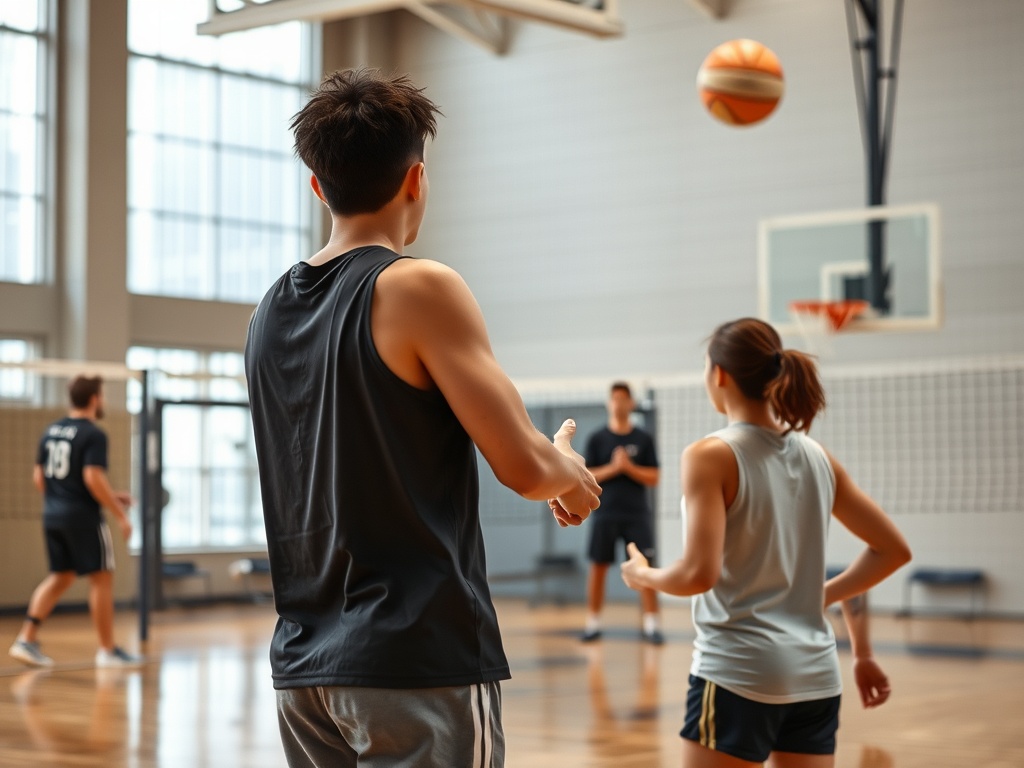

Court awareness in volleyball and basketball is the ability to read space, teammates, opponents, ball movement, and likely next actions before the play fully develops. It improves when athletes train scanning, communication, spacing, and decision speed instead of only drilling isolated technique.
Quick takeaways
- Awareness is a trainable skill, not a vague “feel for the game.”
- The best drills add perception first, then speed and pressure.
- Measurement can be simple: fewer late reactions, better spacing, cleaner calls, and more purposeful off-ball movement.
Why awareness breaks down under speed
In both volleyball and basketball, the ball attracts attention. Beginners often watch the ball so closely that they lose sight of blockers, cutters, passers, help defenders, open seams, or coverage responsibilities. That is why awareness training should include the eyes, the voice, and the feet. General movement guidance from the Physical Activity Guidelines for Americans supports varied conditioning, but tactical awareness needs sport-specific practice layered on top.
Court awareness also connects to pressure management. A player who scans early has more time to choose, which can lower panic during a serve receive, fast break, late rotation, or final-possession set. For the mental side of repeatable sport actions, readers can pair this guide with routines for free throws, penalty kicks, putts, and serves.
A four-part drill progression
| Progression | Volleyball example | Basketball example |
|---|---|---|
| Scan before contact | Call the open zone before passing or setting. | Call weak-side help before receiving a pass. |
| Add a decision cue | Setter chooses based on blocker position. | Ball handler chooses drive, pass, or reset based on defender angle. |
| Add time pressure | Serve-receive with a limited call window. | Small-sided transition game with quick shot-clock count. |
| Review and repeat | Coach tracks late reads and missed calls. | Team reviews spacing freeze-frames after each rep. |
Coaching cues that actually help
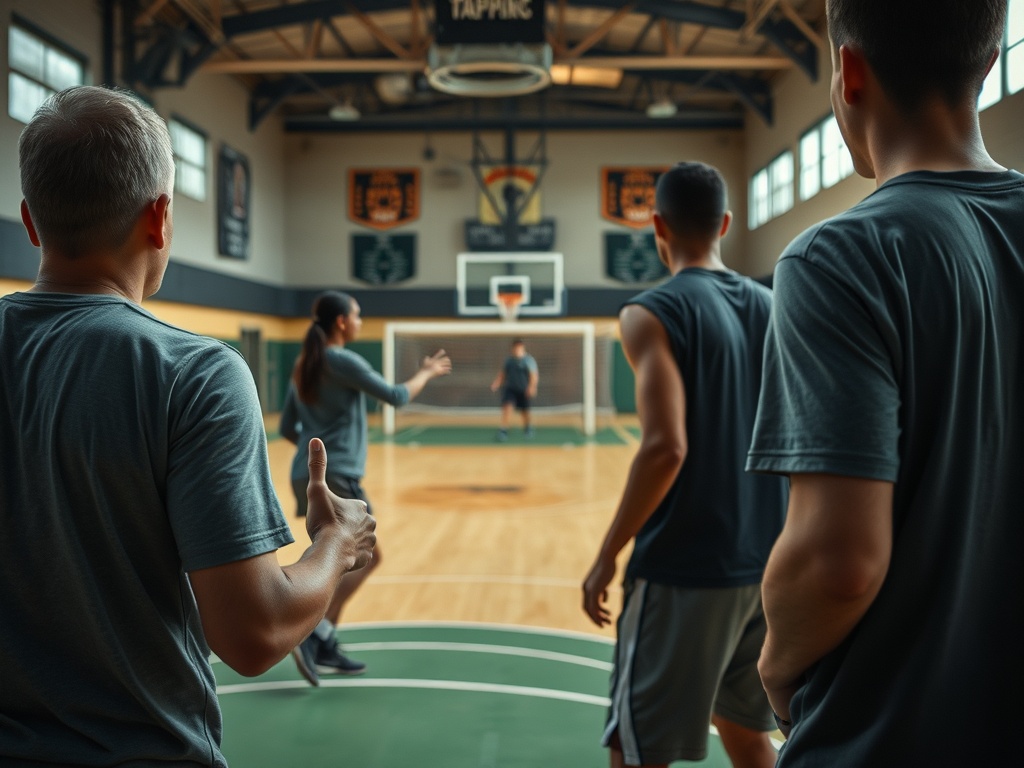
- “Check early, then move” is stronger than “look around” because it links vision to timing.
- “Name the next threat” forces players to identify a specific opponent or space.
- “Talk before the ball arrives” improves team spacing and reduces rushed commands.
- “Freeze, point, explain” helps younger players connect what they saw with what they did.
Common mistakes during awareness drills
The first mistake is making every drill too clean. If the athlete always knows where the pass will go, the drill trains execution more than reading. The second mistake is adding chaos too early. Players need a clear cue before they can handle full-speed randomness. The third mistake is measuring only highlights. Improvement often appears as small, steady decisions: arriving in the right lane, rotating early, or making the simple pass.
Conditioning matters because tired players scan less and react later. That is why awareness sessions should eventually connect to repeat sprint ability for court sports rather than staying separate from physical preparation. Coaches can use short, intense blocks so athletes practice reading while slightly fatigued but not so exhausted that quality disappears.
A practical weekly setup
Use two short awareness blocks per week. Start with five minutes of scan-and-call warmups, then add a 10-minute decision drill, then close with one competitive small-sided game. Keep the feedback narrow. In one session, grade early scanning. In another, grade communication timing. In another, grade off-ball spacing.
For basketball, small-sided games such as 3-on-3 naturally create repeated read-and-react moments. For volleyball, serve-receive and transition drills can be modified so passers, setters, and hitters must call what they see. The point is not to make players talk constantly; the point is to make communication useful, early, and tied to real decisions.
How to know the work is paying off
Track three signs: the athlete reacts before the obvious moment, teammates are less surprised by the next action, and the player makes fewer emergency movements. Video review helps because athletes often discover that the correct cue appeared earlier than they felt in real time.
Turning awareness into a repeatable habit
The most useful awareness drills feel simple at first. A player might scan the defender, name the open space, then complete a pass. Once that pattern becomes reliable, the coach can add movement, noise, fatigue, or score pressure. This order matters because players cannot build a dependable habit if the environment is random from the first repetition.
Coaches should also define what success looks like before the drill starts. In volleyball, success may be an early call from the passer before the setter touches the ball. In basketball, it may be a wing player lifting at the correct time to create a passing lane. These details make awareness observable. They also connect naturally with repeat sprint conditioning for court sports, because scanning quality often drops when athletes are tired.
Simple review questions after practice
- What did the athlete notice before the ball arrived?
- Was the communication early enough for a teammate to use it?
- Did the player move because of a cue, or only after the play became obvious?
- Which read should be repeated next practice before adding more speed?
For younger players, keep the language concrete. “See two defenders before you cut” is easier to act on than “be smarter off the ball.” For advanced players, review can become more tactical, but the foundation stays the same: perceive early, decide clearly, and move with purpose.
How beginners and advanced players differ
Beginners usually need fewer cues and more repetition. Advanced players can handle disguised cues, opponent tendencies, and quicker transitions, but they still benefit from the same review language. The coach’s job is to raise the challenge without turning the drill into a guessing game. A player should know what they are trying to read, why it matters, and how that read changes the next movement.