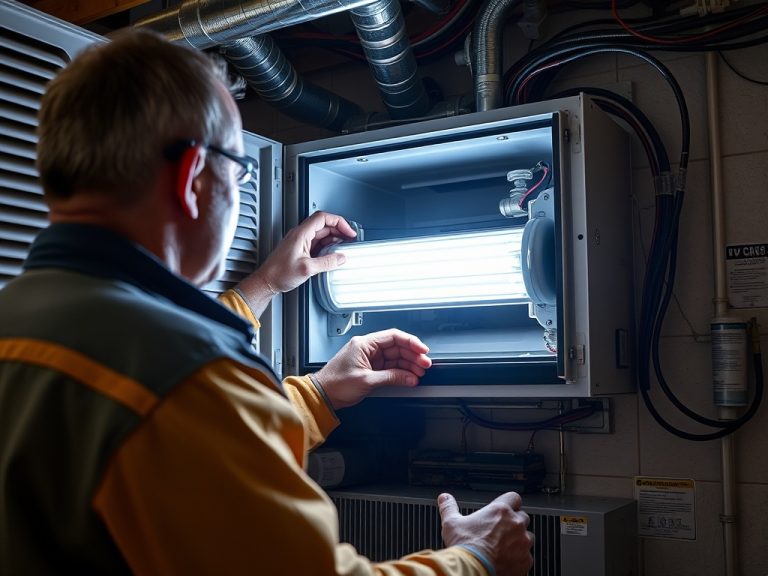
A heat pump that enters defrost mode briefly during cold, damp weather is usually operating normally. A heat pump that seems to stay in defrost, repeatedly ices over, or cannot return to steady heating may have an airflow, sensor, control, refrigerant, drainage, or outdoor-unit problem that needs diagnosis.
- Light frost on an outdoor heat-pump coil can be normal in heating mode because the coil may run colder than the outdoor air.
- Defrost temporarily reverses operation so the outdoor coil can warm and melt frost.
- Thick ice, very frequent defrost, persistent cold-air complaints, or a unit that never clears should be evaluated rather than chipped or forced manually.
Why Heat Pumps Need a Defrost Cycle
In heating mode, an air-source heat pump moves heat from outdoor air into the house. The outdoor coil becomes cold as refrigerant absorbs heat. When outdoor air is both cool and moist, water can condense on that coil and freeze. A light layer of frost reduces heat transfer, so the system periodically needs to remove it.
Trane’s current explanation of the heat pump defrost cycle describes frost formation on the outdoor coil and the temporary reversal used to clear it. During defrost, homeowners may notice a change in sound, temporary cooler supply air, auxiliary heat operation on some systems, water below the outdoor unit, or a cloud that looks like steam. Those signs can be normal when they are brief and the unit returns to heating.
What “Stuck in Defrost” Can Mean
Homeowners use the phrase in several ways. The unit may be entering defrost too often, staying in the cycle longer than expected, never clearing heavy ice, blowing cool air indoors for long periods, or appearing to switch back and forth without restoring heat. The exact symptom matters because the causes are different.
Before diagnosing the system, observe what is actually happening. Note outdoor temperature and weather, how much ice is present, whether the fan is running, whether the thermostat shows auxiliary or emergency heat, how long the unusual operation lasts, and whether the house temperature is falling.
Normal Frost Versus a Problem
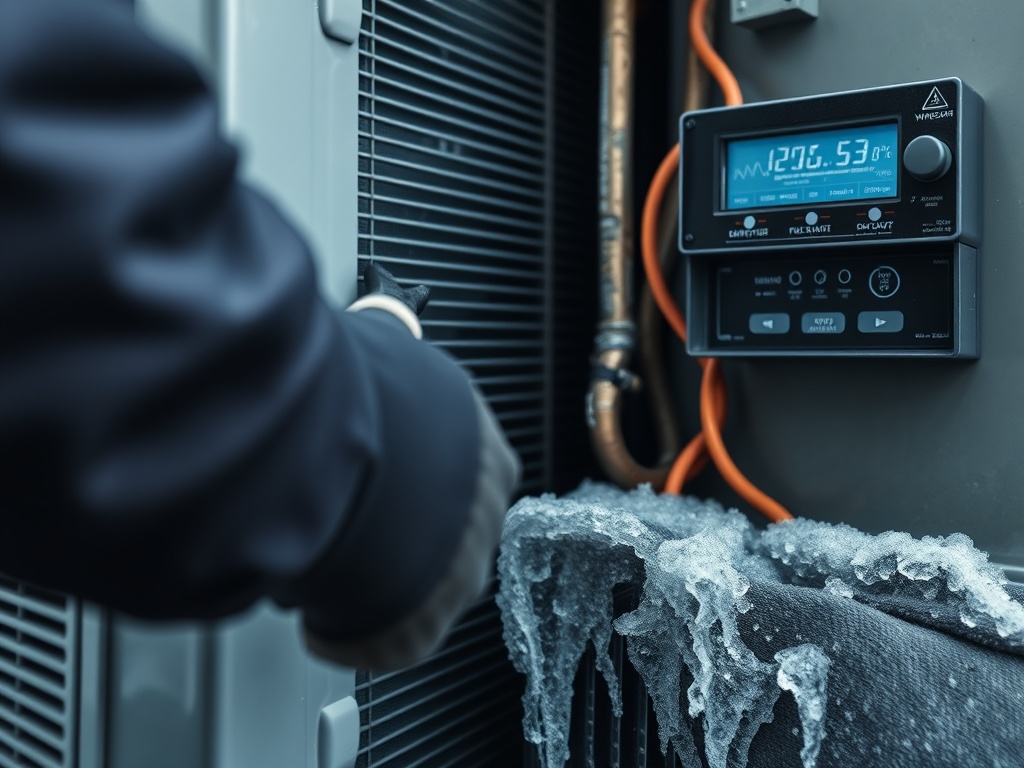
A thin, temporary frost layer that disappears during a defrost cycle is usually different from a solid block of ice surrounding the coil or fan guard. Persistent heavy icing can restrict airflow and heat transfer. Water from a normal defrost cycle also needs somewhere to drain; if it refreezes around the base in severe weather, site conditions and drainage can complicate operation.
Carrier’s heat-pump troubleshooting guidance distinguishes light frost from heavy ice and notes that restricted airflow, low refrigerant conditions, and frozen runoff can contribute to abnormal icing. Manufacturer guidance is useful for understanding symptoms, but the exact service thresholds and controls vary by model.
Safe Checks a Homeowner Can Make
- Confirm the thermostat is set to the intended heating mode and that the setpoint is reasonable.
- Check whether the indoor filter is visibly dirty or overdue according to the system and filter instructions.
- Make sure supply and return grilles are not blocked.
- Look outside for leaves, drifting snow, plastic covers, fencing, or other objects that obstruct airflow around the unit.
- Observe the ice pattern without opening service panels or touching electrical components.
- Check for obvious water pooling or a drainage path that has frozen around the base.
- Note any fault message or indicator exactly as displayed, but do not reset controls repeatedly to make the message disappear.
Do not chip ice off the coil with tools, pour boiling water over the unit, bypass sensors, force relays, or enter refrigerant and electrical compartments. Coil fins and tubing can be damaged easily, and electrical or refrigerant work requires appropriate training.
Common Causes of Abnormal Defrost Behavior
Restricted outdoor airflow
Leaves, snow, landscaping, lint, or debris can reduce airflow through the outdoor coil. A dirty outdoor coil can produce a similar effect. Clear only loose, safely accessible obstructions and maintain the manufacturer’s required clearances. Coil cleaning should follow manufacturer procedures.
Sensor or control problems
Heat pumps use temperature sensors, timers, pressure logic, or control boards to decide when to initiate and terminate defrost, depending on the design. A failed sensor, loose connection, damaged wiring, or control fault can cause unusual cycling. These issues generally require instrumented diagnosis.
Refrigerant or reversing-valve issues
Defrost depends on the refrigeration circuit changing operating conditions. Low refrigerant charge, a leak, restriction, or reversing-valve problem can reduce capacity or prevent the coil from clearing properly. Refrigerant diagnosis and repair are not homeowner tasks.
Indoor airflow problems
A dirty filter, failing blower, closed dampers, duct restriction, or other airflow problem can affect system pressures and heating performance. ENERGY STAR’s HVAC maintenance checklist emphasizes filters, airflow, controls, coils, electrical connections, and refrigerant checks as part of routine system care.
When the Weather, Not a Fault, Is Driving More Defrost
Cold, damp weather near freezing can create more frost than very cold, dry weather. That means defrost frequency may change from one day to another even when nothing has failed. Wind exposure, drifting snow, roof runoff, and installation location can also change outdoor-unit conditions.
Climate is one reason heat-pump selection should look beyond a seasonal efficiency number. The guide to how climate zone affects the best HVAC system for a home explains why low-temperature capacity, humidity, and local design conditions belong in the original equipment decision.
Signs It Is Time to Call for Service
Arrange professional evaluation when heavy ice does not clear, the outdoor fan is striking ice, the home cannot maintain temperature, breakers trip, there is a burning or electrical odor, the system produces repeated error codes, the unit switches abnormally often, or defrost appears to continue without returning to normal heating.
Also call when a symptom repeats after basic airflow obstructions have been removed. Repeated resets can erase useful fault history or temporarily hide a control problem. A technician can compare sensor readings, refrigerant operation, airflow, control sequence, and manufacturer specifications instead of guessing from the appearance of frost alone.
If you are deciding who should diagnose the problem, review how to check reviews and references for an HVAC company and ask whether the technician routinely services your type of heat-pump equipment.
Preventive Steps That Reduce False Alarms
Keep the outdoor unit clear through the season, replace or clean filters as required, keep grilles open, and schedule maintenance at the intervals recommended for the equipment and local operating conditions. If roof runoff or drifting snow repeatedly reaches the unit, ask a qualified contractor about site-specific corrections rather than improvising a cover that could restrict airflow.
If the system has a history of heavy icing, do not wait for the next cold snap to investigate. Problems that are intermittent in mild weather can become much more disruptive when the heat pump is operating near its winter design load.
Defrost Should Be Temporary and Purposeful
Defrost is a normal control function designed to restore heat transfer at the outdoor coil. The problem is not that defrost happens. The problem is when the system cannot complete the process, cannot recover afterward, or develops ice faster than normal operation can manage.
Start with safe observations and simple airflow checks. If thick ice, long cold-air periods, fault codes, or loss of heating continue, have a qualified HVAC technician diagnose the system using the manufacturer’s service information and measured operating data.
This article is for informational and educational purposes only and does not constitute professional HVAC, electrical, structural, code, or legal advice. Consult a licensed HVAC contractor or other qualified professional for system-specific guidance.