UV light systems can help in specific HVAC air-cleaning or coil-treatment applications, but they are not a universal fix for indoor air quality. Their value depends on the target, lamp placement, UV dose, airflow, maintenance, and whether the rest of the ventilation and filtration system is working properly.
- HVAC UV usually means germicidal ultraviolet, most often UV-C, installed in an air handler, duct, or other controlled location.
- UV can inactivate susceptible microorganisms under the right exposure conditions, but it does not remove dust, gases, or every contaminant.
- Treat UV as a supplemental control and evaluate design, safety, lamp access, and maintenance before buying.
What HVAC UV Light Is Actually Trying to Do
Most HVAC UV products use germicidal ultraviolet energy to damage microorganisms so they cannot reproduce effectively. In an HVAC context, the two common goals are different: irradiating a wet surface such as a cooling coil to limit biological growth on that surface, or treating moving air as it passes through an irradiated section of the system.
The U.S. Environmental Protection Agency explains that a professionally designed and maintained HVAC UVGI system can be part of an indoor-air strategy, but UVGI by itself is not enough to protect occupants from airborne disease. That distinction matters because homeowners are often shown UV products as though every indoor-air problem has the same cause.
Coil Irradiation and Air Disinfection Are Different Jobs
A coil-mounted lamp can have long exposure time on a stationary surface. Air moving through a duct passes the lamp quickly, so air-treatment performance depends heavily on irradiance, distance, exposure time, air velocity, lamp output, temperature, reflectivity, and installation geometry. A lamp that keeps a coil cleaner is not automatically providing a meaningful dose to every airborne organism passing through the duct.
ASHRAE maintains testing standards for ultraviolet equipment, including Standard 185.2 for ultraviolet lamps used in HVAC&R units or air ducts. For a homeowner, the practical takeaway is to ask for test data and the intended application rather than assuming that “UV-C” on a product label proves a complete air-disinfection outcome.
| Question | UV may help with | UV does not replace |
|---|---|---|
| What is the target? | Susceptible microorganisms on irradiated surfaces or in treated air | Particle filtration, source control, outdoor-air ventilation |
| Where is the lamp? | Coil area, air handler, or engineered duct section | Proper duct design and airflow |
| How is performance verified? | Application-specific testing, sizing, commissioning | Marketing claims without system context |
| What maintenance is required? | Lamp cleaning, output checks, scheduled replacement | Routine filter, coil, drain, and HVAC maintenance |
What UV Does Not Remove From the Air
UV is not a particle filter. It does not capture dust, pollen, pet dander, smoke particles, or fibers. It also does not function like activated carbon for many gases and odors. If the complaint is visible dust, a UV lamp may be addressing the wrong mechanism. If the complaint is stale air or elevated indoor pollutants because the home is under-ventilated, adding UV does not create outdoor-air exchange.
That is why a broader indoor-air review can be useful before selecting accessories. If rooms feel stale, odors linger, bathroom moisture persists, or combustion concerns exist, review whether adding zones during an HVAC replacement makes sense when uneven airflow or room-by-room comfort is part of the complaint, rather than expecting UV to compensate for a distribution problem.
Where UV Can Fit Into an HVAC Strategy
The Centers for Disease Control and Prevention describes germicidal ultraviolet as a supplemental air-cleaning approach and notes that in-duct GUV can enhance air cleaning inside central ventilation systems. In practice, that means UV works best when the basic system is already doing its job: filters fit correctly, airflow is adequate, coils and drains are maintained, ventilation is appropriate, and the equipment can be serviced safely.
In humid climates, a cooling coil stays wet for long periods during operation. Surface irradiation is sometimes used to discourage biological growth on coil and drain-pan surfaces, which can help maintenance in suitable systems. The expected benefit should be framed as an equipment-hygiene or supplemental air-treatment measure, not as a guarantee that occupants will no longer have allergies, odors, mold concerns, or respiratory infections.
Safety and Installation Are Not Optional Details
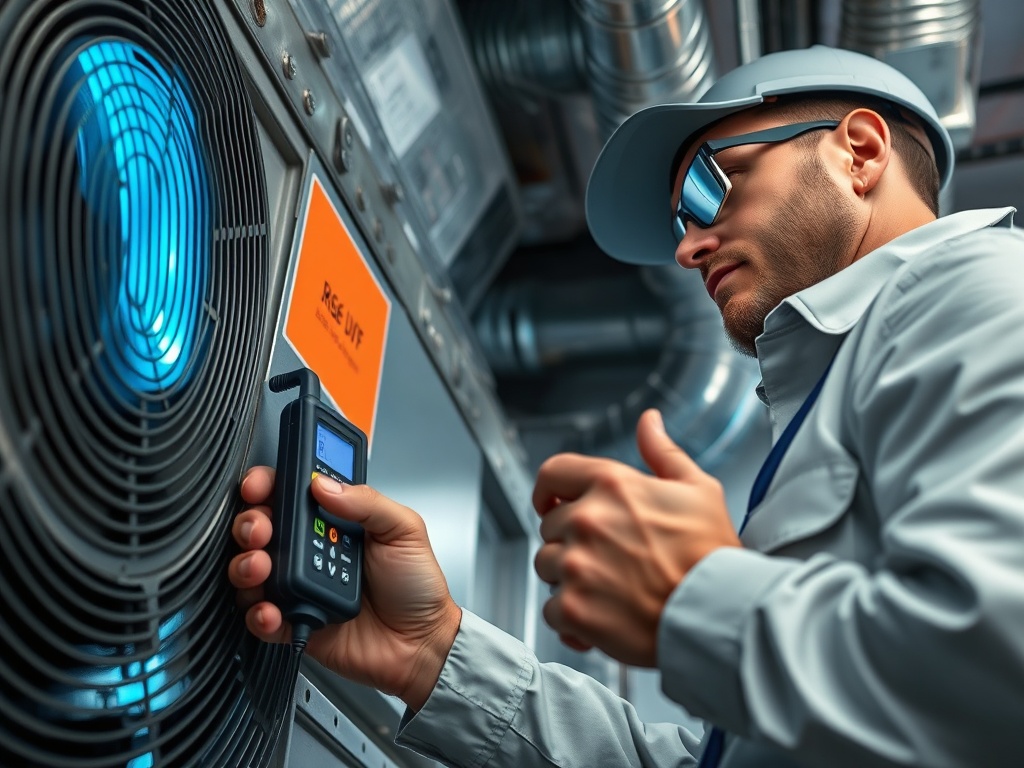
Germicidal UV can injure eyes and skin if people are exposed directly or through unsafe reflection. HVAC lamps also add electrical components in a service area where technicians may need to work. A good installation includes shielding, interlocks or safe shutoff practices where appropriate, clear service procedures, compatible materials, and lamp placement that avoids unintended exposure.
Do not install a generic ultraviolet source that was not designed for HVAC use. EPA specifically cautions against UV technology that is not designed for indoor air disinfection because unsafe exposure can occur. If a system is being proposed for occupied-space air treatment rather than inside equipment, the design requirements are different and should be handled by people familiar with germicidal UV safety and commissioning.
Questions to Ask Before Buying a UV System
- What exact problem is the UV system intended to address: coil growth, airborne microorganisms, or something else?
- Is the proposed device designed for the specific air handler, duct size, airflow, temperature, and installation location?
- What independent or recognized testing supports the claimed performance for that application?
- How will the installer prevent direct or reflected UV exposure during normal use and service?
- How often must lamps be inspected, cleaned, or replaced, and how will reduced lamp output be handled?
- Can the UV energy affect nearby plastics, wiring insulation, filters, sealants, or drain components over time?
- Will the installation obstruct service access, filtration, condensate management, or airflow?
- What indoor-air problem remains after UV is installed, and what other control addresses it?
Those questions can also reveal whether the sales conversation is focused on the equipment or the home. When a proposal includes multiple accessories during replacement, it is worth reviewing how to check reviews and references for an HVAC company before authorizing work.
Avoid the “One Device Solves IAQ” Trap
Indoor air quality is a systems problem. Moisture, filtration, outdoor air, source control, combustion safety, occupancy, cleaning practices, and the building envelope interact. UV addresses only a slice of that picture. A home with poor filtration may need a better filter strategy. A home with high humidity may need load and moisture analysis. A home with an overly leaky envelope may need air sealing combined with intentional ventilation.
If you are deciding between indoor-air upgrades and broader HVAC work, start with the cause of the complaint. The article on how climate zone affects HVAC system selection is useful when humidity or seasonal conditions are part of the problem, because climate can change both the moisture load and the way equipment operates.
The Bottom Line on HVAC UV
HVAC UV can be technically useful, but usefulness is application-specific. It should supplement, not substitute for, filtration, ventilation, moisture control, and routine maintenance. The strongest decision is based on a defined indoor-air or equipment-hygiene objective, credible product data, safe installation, and a maintenance plan you will actually follow.
If UV is being bundled into a larger replacement, compare it against the priorities that directly affect comfort and equipment performance first. Proper sizing, airflow, duct condition, refrigerant setup, drainage, and controls usually deserve attention before optional accessories.
This article is for informational and educational purposes only and does not constitute professional HVAC, electrical, structural, medical, code, or legal advice. Consult a licensed HVAC contractor or other qualified professional for system-specific guidance.