
Cluster: Oral-Systemic Health, Sleep & Oral Medicine | Type: Industry Insight | Funnel: Middle of Funnel
TL;DR
Dental problems don’t stay confined to your mouth. Chronic tooth pain, gum disease, and untreated oral conditions can disrupt sleep, lower mood, and interfere with concentration, nutrition, and social confidence—often in ways patients don’t immediately connect to their teeth.
The Mouth-Body Connection Most People Underestimate
Oral health has long been treated as a separate category from general health, handled by a different provider, billed through different insurance, and discussed in different conversations. But research increasingly shows that what happens in the mouth has measurable effects on the rest of the body—and on how people feel day to day.
This article examines those connections practically: how specific dental problems ripple outward into sleep, mood, concentration, and daily quality of life, and what that means for when to seek care.
Dental Pain and Sleep Disruption
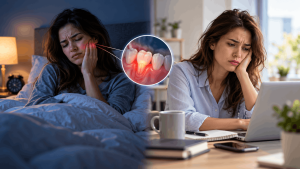
Toothache pain is one of the most reliable sleep disruptors a person can experience. Because most tooth pain is caused by inflammation—whether from decay, abscess, exposed nerve, or gum disease—it tends to intensify when you lie down. Increased blood flow to the head in a horizontal position raises pressure around the affected tooth, which is why many people with dental pain describe it as worse at night.
Chronic dental pain also affects sleep architecture. Even when people manage to fall asleep, pain can prevent the deep restorative stages of sleep from being reached, leading to fatigue that compounds over days and weeks. Studies in sleep medicine have found that chronic orofacial pain is significantly associated with poor sleep quality and increased rates of insomnia (Journal of Oral Rehabilitation, 2020).
Teeth grinding, or bruxism, is a related issue. Many people grind their teeth during sleep without being aware of it until a partner mentions the noise or a dentist notices wear patterns. Bruxism causes jaw muscle soreness and headaches that are often present upon waking, making mornings uncomfortable from the first moment—and contributing to sleep that feels unrestorative.
Gum Disease and Systemic Inflammation
Periodontal (gum) disease is a chronic bacterial infection. When left untreated, it doesn’t simply stay localized to the gums—it creates a sustained low-level inflammatory state. According to the American Academy of Periodontology, gum disease has been associated with elevated systemic inflammation markers, which play roles in cardiovascular disease, metabolic conditions, and other chronic health issues.
Chronic inflammation has well-documented effects on mood. The relationship between inflammatory cytokines and depression has been an active area of research for over a decade, and while causality is complex, there is meaningful evidence that people with conditions driving chronic inflammation—including gum disease—may experience elevated rates of depressive symptoms. This is not to say that treating gum disease cures depression, but untreated oral disease may be one contributor to how people feel overall. Our article on signs you’re overdue for a dental exam covers some of the physical warning signs worth taking seriously.
The Impact on Concentration and Work Performance
Dental pain doesn’t need to be severe to be distracting. Low-grade persistent sensitivity, jaw discomfort, or the anxiety of knowing something is wrong with a tooth can occupy a notable share of cognitive bandwidth. People dealing with unresolved dental issues frequently report difficulty concentrating, increased irritability, and reduced productivity at work.
This is especially relevant for people who are delaying treatment due to cost or anxiety. The discomfort of the untreated problem often extracts a higher daily cost—in focus, mood, and social ease—than the dental visit they’re avoiding.
Nutrition, Chewing, and Long-Term Health
When certain teeth hurt, most people unconsciously shift chewing to the other side of their mouth or avoid specific textures entirely. Over time, this can limit the variety of foods someone eats. Hard, crunchy, or fibrous foods—many of which are nutritionally valuable—often get eliminated first. Leafy greens, raw vegetables, nuts, and some fruits may become avoided.
Nutritional changes driven by dental problems can affect energy levels, immune function, and overall health outcomes. In older adults, tooth loss combined with difficulty chewing is linked to reduced dietary quality and higher risk of malnutrition (Journal of the Academy of Nutrition and Dietetics, 2019).
Social Confidence and Mental Wellbeing
Concerns about tooth appearance, bad breath, or visible decay affect how people present themselves socially. Avoiding smiling, speaking carefully, or withdrawing from situations where one’s teeth might be noticed are all reported consequences of untreated dental issues. This isn’t superficial—social confidence has real ties to mental health, professional outcomes, and relationship quality.
Halitosis (persistent bad breath) caused by gum disease, decay, or infection is a particularly underappreciated source of social anxiety. Patients often don’t know the origin and assume it’s a hygiene issue rather than a treatable condition. If a tooth has died or developed an abscess, the bacterial odor can be significant—you can learn more about what triggers that in our article on what causes a tooth to die without a big cavity.
Sleep Apnea: When Oral Structure Plays a Role
Dentists are often among the first clinicians to identify structural factors contributing to obstructive sleep apnea—including jaw alignment, tongue position, and the size of the airway. Oral appliances fitted by dentists are one of the recognized treatments for mild to moderate OSA, positioning the jaw to keep the airway open during sleep.
Untreated sleep apnea has sweeping effects on mood, cognition, cardiovascular health, and daily functioning. For patients who’ve been told they snore heavily or who wake feeling unrefreshed despite adequate hours in bed, a dental evaluation that includes an airway assessment may be a useful step alongside a sleep medicine consultation.
What This Means for When to Seek Care
If sleep disruption, mood changes, or difficulty concentrating are currently affecting your life, it’s worth considering whether an unaddressed dental issue might be a contributing factor. Scheduling an exam—even without acute pain—allows a dentist to assess gum disease, tooth wear, abscess risk, and structural factors that may be quietly affecting your health.
Proactive care, rather than crisis response, is how most of these outcomes are prevented. The connection between oral health and systemic wellbeing is no longer a fringe idea—it’s an established area of research that continues to deepen.