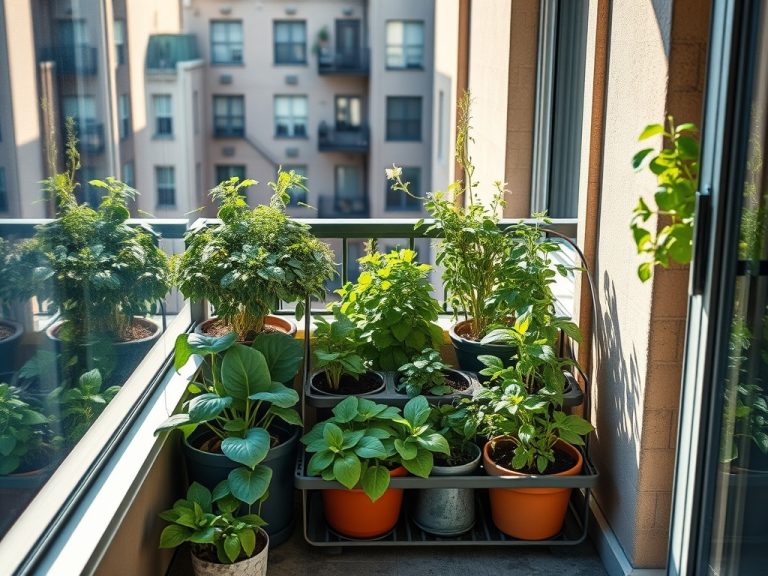
A productive patio or balcony vegetable garden starts with the right crop for the available sun, a container large enough for the roots, reliable drainage, and consistent watering. Containers make food gardening possible in small spaces, but they also magnify mistakes because roots have less soil to buffer heat, drought, and nutrient changes.
TL;DR: Measure sunlight first, choose compact crops that fit your container depth, use fresh potting mix rather than yard soil, water according to actual moisture, and plan support before vines become heavy. Leafy greens and herbs are often easier in partial sun, while tomatoes, peppers, cucumbers, and many other fruiting crops usually need stronger light.
Match the Crop to the Balcony
Before buying seeds or seedlings, observe the space for several days. Note direct sun hours, wind, reflected heat from walls, and how far rain reaches under an overhang. A south- or west-facing balcony can become much hotter than the air temperature suggests, while a covered north-facing patio may stay bright but receive little direct sun.
The University of Minnesota Extension’s small-space container guidance notes that many vegetables and flowers perform best with substantial sun. In lower-light spaces, prioritize leafy crops and herbs that can tolerate less direct exposure.
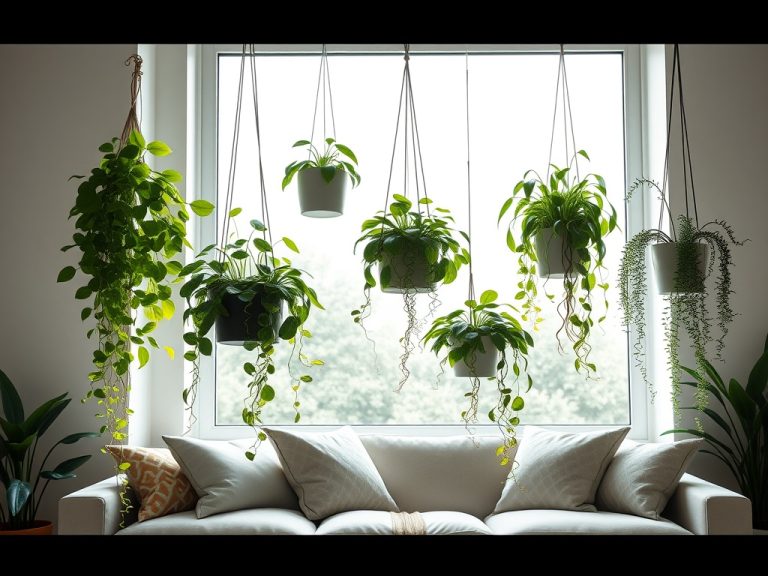
If the outdoor site is too dim for fruiting vegetables but the adjacent interior is bright, best hanging plants for bright indoor spaces offers a better-fit direction for using that available light.
Use Enough Root Volume
Small pots are easy to place, but they dry quickly and restrict root growth. Larger vegetables need larger containers, while quick leafy crops can grow in shallower planters. Exact needs vary by cultivar, so seed packets and transplant labels should guide final sizing.
A practical starting framework is:
| Crop Type | Container Direction | Useful Setup Note |
|---|---|---|
| Lettuce, spinach, arugula | Wide planter with moderate depth | Good for succession sowing in suitable weather |
| Parsley, chives, basil | Individual or mixed herb pots | Keep aggressive spreaders such as mint separate |
| Bush beans | Medium-to-large container | Choose compact cultivars and provide even moisture |
| Peppers | One plant in a substantial pot | Warmth and strong light support fruiting |
| Patio or dwarf tomatoes | Large container | Stake or cage at planting time |
| Compact cucumbers | Large pot with trellis | Secure support before vines gain weight |
A container must also be safe for the location. Wet potting mix is heavy. Check balcony rules and structural limits before clustering large planters, water reservoirs, and furniture in one area.
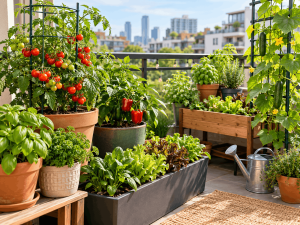
Drainage Is Non-Negotiable
Every vegetable container needs a way for excess water to escape. Standing water around roots can reduce oxygen and contribute to root problems. Use pots with drainage holes and saucers where runoff must be controlled, but empty standing water rather than allowing the root zone to remain saturated.
Fill containers with a commercial potting mix formulated for container growing. Garden soil can become dense in a pot. Reusing old container mix may also carry weeds, salts, or disease issues, so assess it carefully before deciding to keep it.
If you want to understand why pH and nutrient availability matter in the root zone, the same-domain Beginner’s Guide to Soil pH explains the concept without treating pH as a number to chase blindly.
Plan Supports Before Planting
Tomato cages, stakes, and trellises are easiest to install before roots and stems fill the pot. Use supports that cannot tip or become sails in strong wind. On upper floors, loose stakes, lightweight trellises, and hanging objects can become safety hazards.
Do not attach a trellis to railings, walls, or overhead structures unless the building allows it and the attachment is secure. A freestanding trellis anchored within a heavy container may be a better renter-friendly option, but wind exposure still matters.
Water the Root Zone, Not the Calendar
Containers can need frequent watering during hot weather, but frequency varies with pot size, plant size, material, wind, sun, and potting mix. Check moisture before watering. Smaller pots and terra-cotta containers can dry especially fast.
The University of Minnesota Extension guide to watering and fertilizing container plants recommends adjusting care to the growing medium and plant growth rather than treating every container the same.
Water thoroughly so the root zone is moistened and excess can drain. Morning is often convenient because plants begin the day hydrated and leaves have time to dry if they are splashed. In extreme heat, containers may still need an additional check later.
For trees and shrubs, “deep watering” means something different because the root zone is far larger. The article on how to deep water trees and shrubs correctly covers that separate landscape practice.
Feed According to the Mix and the Crop
Container plants cannot draw nutrients from surrounding soil. Some potting mixes include starter fertilizer or slow-release nutrients; others do not. Read the bag label before adding anything.
For a long-season fruiting crop, periodic feeding may be appropriate once existing nutrients are depleted. Follow fertilizer directions and avoid the common mistake of assuming a stressed plant always needs more food. Heat, root saturation, pests, and inadequate light can all reduce growth.
If leaves look unhealthy, diagnose conditions before applying fertilizer. Too much fertilizer can damage roots and increase salt buildup.
Make Succession Planting Work in Small Space
One container can produce more than one planting through a season when timing and climate allow. Cool-season greens can be followed by a warm-season crop, or a harvested planter can be resown with quick greens later. This is more efficient than leaving containers empty after one harvest.
Use crop-specific sowing dates for your region. Local extension calendars are more reliable than national month-by-month lists because frost dates and summer heat vary widely.
Watch the Microclimate
Balconies can be windy, dry, reflective, and hotter than ground-level gardens. Wind can tear large leaves, topple stakes, and accelerate water loss. Glass walls and light-colored masonry can reflect heat. Covered patios may block useful rain while still feeling humid.
Move containers when practical, provide shade during exceptional heat for sensitive crops, and avoid letting vines block vents, doors, or safety access. If a plant consistently struggles despite correct care, the site may simply be a poor match for that crop.
Common Container Vegetable Problems
Blossoms but little fruit: Light, temperature, pollination, cultivar, or plant stress may be involved. Do not assume fertilizer is the answer.
Wilt every afternoon: Check soil moisture. A plant can wilt from heat even when the root zone is moist, and overwatering a hot plant can create a second problem.
Yellow lower leaves: Consider natural aging, nutrient issues, watering, root health, and disease. Inspect the whole plant before treating.
Tiny harvest from a crowded pot: Too many plants may be competing for root space, water, light, and nutrients. Thin or transplant early.
Pests appear quickly: Inspect leaf undersides and new growth. Identify the pest before selecting a control, and use only products labeled for the crop and site.
Build One Reliable Container Before Expanding
Start with one large, well-drained container and a crop matched to your light. Learn how quickly it dries, how wind affects it, and how much support it needs. Once that system works, add another crop rather than multiplying the same problems across ten pots.
This article is for general educational purposes. Planting dates, fertilizer needs, pest controls, balcony rules, and structural limits vary by location. Follow local extension guidance, product labels, property rules, and qualified structural advice when needed.[/