Bright indoor spaces are ideal for hanging plants that trail, arch, or cascade without needing direct outdoor-style sun. The strongest choices are plants whose light needs match bright indirect exposure and whose watering habits suit the height, airflow, and container style of a hanging display.
TL;DR: Pothos is the forgiving all-rounder, hoya suits people who prefer a drier routine, spider plant offers arching foliage and easy propagation, creeping pilea gives a softer fine-textured cascade, and selected air plants can work in suspended displays. Bright indoor light should still be assessed carefully because direct rays through glass can be much harsher than bright indirect light.
Read the Window Before Choosing the Plant
A “bright room” is not a precise horticultural condition. A plant hanging directly in a south-facing window may receive intense direct sun, while another hanging six feet into the same room may receive only moderate light. Curtain fabric, window coatings, nearby buildings, tree canopy, and season all change the exposure.
The University of Minnesota Extension guide to lighting for indoor plants recommends matching plants to the actual light environment. Use that principle first. Watch where direct rays fall, how long they remain, and whether the plant will hang close to hot glass.
If foliage pales, scorches, or develops crisp patches after a move, the light may be too intense. If stems stretch and leaf spacing becomes wider, the plant may be reaching for more light. Those signs are more useful than relying on a room label such as “sunny.”
Five Hanging Choices Worth Considering
| Plant | Best Fit | Watering Style | Main Watch-Out |
|---|---|---|---|
| Pothos | Beginner-friendly trailing display | Let mix dry somewhat between waterings | Avoid persistently wet soil |
| Hoya | Bright indirect light and lower-maintenance routine | Allow more drying between waterings | Heavy vines need secure support |
| Spider plant | Arching foliage and plantlets | Moderate, consistent care | Tips can brown under stress |
| Creeping pilea | Fine-textured cascade | More even moisture | Can suffer if allowed to stay soggy |
| Tillandsia display | Minimal-soil suspended arrangement | Species-specific soaking/misting and drying | Needs air circulation and correct light |
These are broad care directions. Cultivar, container size, indoor temperature, humidity, potting mix, and season can change how quickly each plant uses water.
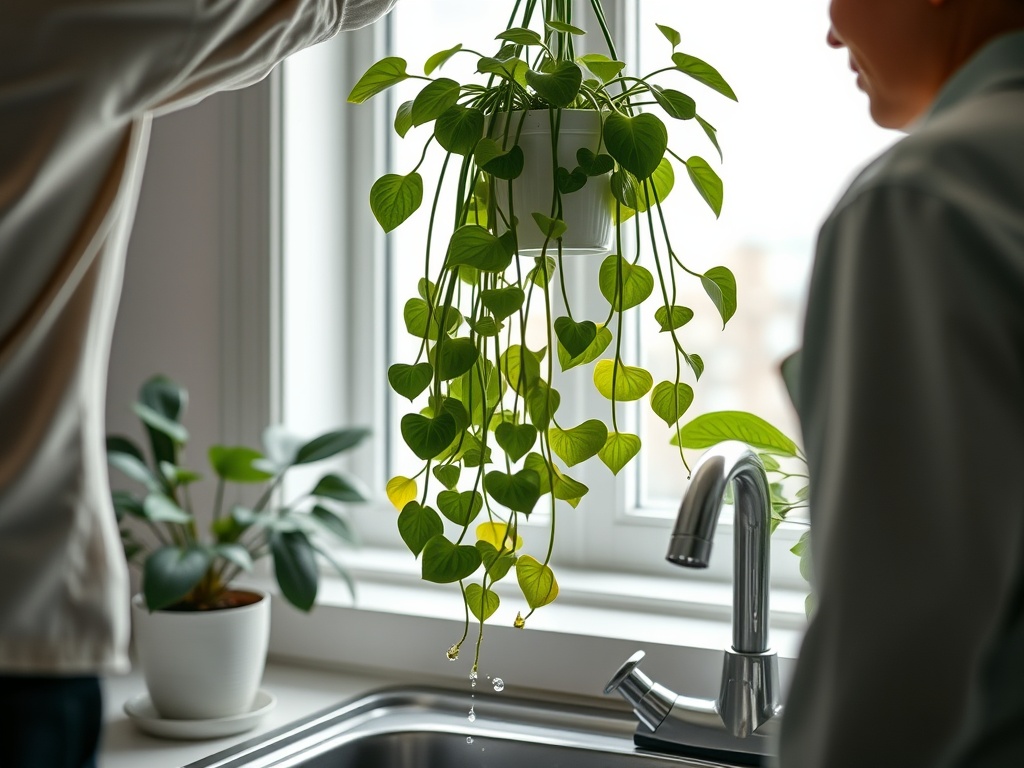
Pothos: The Most Forgiving Trailing Option
Pothos earns its popularity because it tolerates a range of indoor conditions and trails readily from a shelf or hanging basket. Penn State Extension’s pothos houseplant guidance recommends bright indirect light and watering when the plant is dry.
In a bright room, pothos can produce denser growth than it may in a dim corner, but that does not mean it should be pressed against hot glass. Use a well-drained potting mix and a hanging container that can be watered without leaving the roots sitting in drainage water.
Pothos is especially useful if you want a plant that can be pruned and restarted from cuttings. For a fuller basket, several rooted cuttings can be grouped in one container. Keep in mind that plant toxicity matters in homes with pets or small children, so verify the safety of any species before placing it within reach.
Hoya: Best for a Bright Spot and a Lighter Watering Hand
Hoyas are a good match for people who tend to overcare for leafy tropical plants. Their thicker leaves and vining habit suit hanging pots, and many cultivars can flower when light and maturity are appropriate. Penn State Extension notes that hoyas as houseplants generally prefer medium to bright indirect light.
Use a free-draining mix and avoid leaving the root zone constantly saturated. A mature hoya can become surprisingly heavy, so the hanger, ceiling hook, wall bracket, or plant stand must be rated and installed correctly. If you rent, use a permitted support method rather than improvising an attachment that could damage the ceiling or wall.
Spider Plant: Best for Arching Shape and Easy Propagation
Spider plant produces long, arching leaves and plantlets that naturally suit a hanging basket. It is visually lighter than a dense pothos and can work well where you want movement without a heavy mass of foliage.
Bright indirect light generally supports good growth, although spider plant can tolerate less. Give the roots drainage, and avoid treating every brown leaf tip as proof that the plant needs more water. Tip browning can have several causes, including water quality, fertilizer salts, inconsistent moisture, or environmental stress.
If you enjoy multiplying plants, spider plant is one of the easiest choices because the plantlets can be rooted to create new containers. Those smaller starts can later support an indoor collection or a seasonal container vegetable gardening setup on patios and balconies where non-edible plants are used around the edges for visual interest.
Creeping Pilea: Best for a Fine-Textured Cascade
Creeping pilea offers smaller leaves and a softer trailing look than pothos or hoya. Penn State Extension’s Pilea houseplant guidance describes bright indirect light as a strong fit for pilea grown indoors.
This plant is better for someone willing to pay attention to moisture. A small hanging basket can dry quickly, especially near warm glass or moving air, yet the roots should not stay waterlogged. Check the mix by touch and water thoroughly when needed, allowing excess to drain.
Because fine stems can tangle, occasional trimming helps maintain shape. Rotate the basket periodically if growth leans strongly toward the window.
Air Plants: Best for Lightweight Suspended Displays
Tillandsias are not traditional trailing basket plants, but they can create striking suspended displays because many species do not require conventional potting soil. Penn State Extension guidance for Tillandsia recommends bright indirect light and emphasizes air circulation along with appropriate moisture.
The main mistake is treating them like decorations rather than living plants. They still need species-appropriate watering and enough time to dry afterward. A glass globe that traps moisture may look attractive but can reduce airflow. Choose an open holder or wire arrangement that lets the plant dry properly.
Hanging Hardware Is Part of Plant Care
Use rated hanging hardware suited to the wall or ceiling material, remembering that a watered pot is substantially heavier than an empty one. A freestanding plant hanger is a practical alternative when drilling is not allowed.
For renters, keep the hanging system reversible, protect surfaces, and avoid creating water damage. A drip tray or removable inner pot can make watering safer. Garden-soil chemistry is a separate issue from potting media; for that distinction, see the Beginner’s Guide to Soil pH.
Watering at Height Without Making a Mess
Hanging plants are easy to neglect because they are less convenient to inspect. Build watering into the display design. If possible, use pots that can be lifted down safely. Water at a sink or tub, allow excess to drain, then return the plant to its hanger.
Avoid relying on decorative self-watering devices unless you understand how they affect the root zone. A plant that prefers drying between waterings may suffer if the reservoir keeps the mix constantly moist.
Choose for the Care Routine You Will Actually Keep
Select pothos for resilience, hoya for a brighter drier routine, spider plant for arching foliage and easy propagation, creeping pilea for a softer cascade, or Tillandsia for an open suspended display. Then match the container, hanger, watering method, and exact window exposure to that plant instead of choosing by appearance alone.
This article is for general educational purposes. Houseplant performance and toxicity vary by species and cultivar. Confirm plant identification and safety before placing plants where children or pets can reach them, and use properly rated hardware for suspended containers.[/