A small garden usually looks stronger with one clear focal point than with several competing features. Choose a visual anchor that fits the scale of the space, place it where the eye naturally lands, and use paths, repetition, contrast, and planting to support it rather than fight it.
TL;DR: Pick one main feature per small garden area, test its position from the places where the garden is actually viewed, keep its scale proportional, and repeat a few surrounding colors or shapes to create unity. A focal point can be a specimen plant, container, bench, sculpture, water feature, gate, or view.
Decide What the Eye Should Notice First
A focal point is a deliberate visual destination. Penn State Extension’s principles of garden design describes focal points as elements that draw the eye and cautions that too many can make a garden feel cluttered. That warning is especially useful in a compact space, where almost every object is visible at once.
Stand at the main entry, the kitchen window, the patio chair, or another frequent viewing point. Notice where your eye already goes. A blank wall, the end of a path, a turn in a walkway, or the center of a small courtyard can suggest a natural location.
The feature does not need to be expensive. It needs to be visually intentional and appropriate to the site.
Choose the Right Type of Focal Point
A Specimen Plant
An unusually shaped evergreen, a flowering shrub, a small ornamental tree, or a bold foliage plant can work as a living focal point. Choose species that match the site’s hardiness, light, soil, moisture, and mature size rather than selecting only for appearance at the garden center.
A living focal point changes through the seasons, which can be an advantage. The tradeoff is that pruning, disease, dormancy, and mature size affect the look over time.
A Container
A large container is one of the most flexible choices for a tiny garden. It can add height, color, and structure without permanent construction. UGA Cooperative Extension notes in its mixed-container guidance that containers can direct attention and serve as focal elements.
For renters or very small patios, the same-domain guide to container gardening for renters with limited sun offers practical ideas for keeping planters movable and reversible.
A Bench or Chair
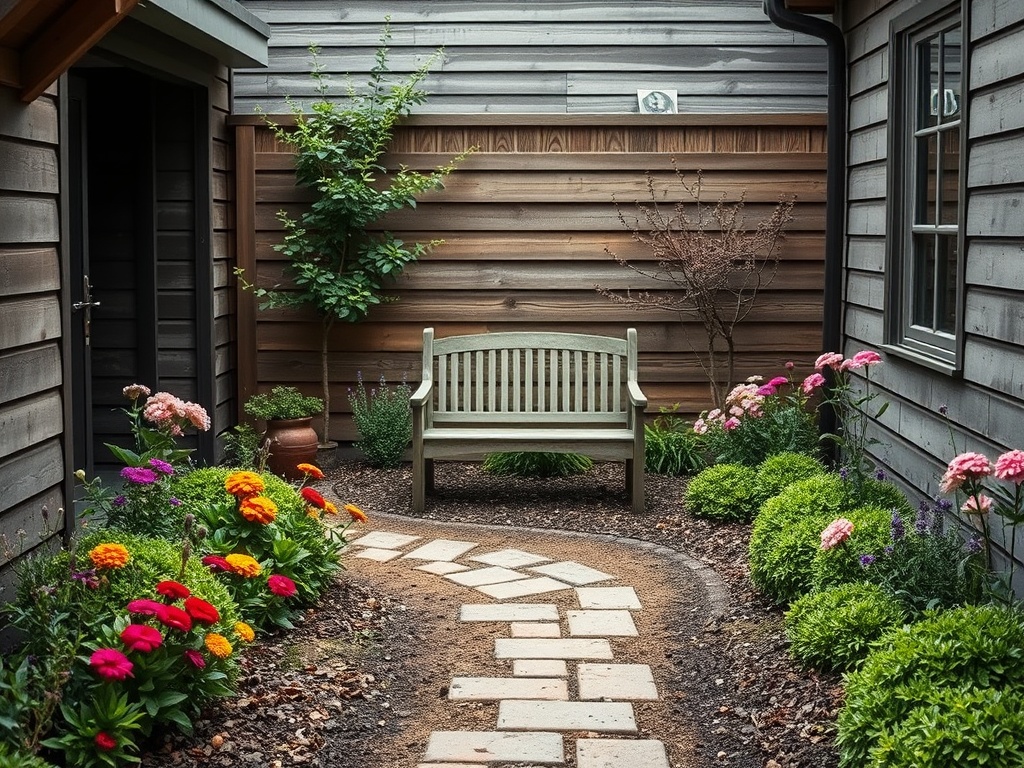
A seat can be both useful and visually strong. It often works well at the end of a short path or against a simple planting backdrop. Avoid oversized furniture that consumes the circulation space around it.
A Water Feature or Sculpture
A small basin, fountain, birdbath, or sculptural object can create contrast with planting. Make sure the feature is easy to clean, safe around children, appropriate for local mosquito management, and suitable for the electrical or water setup if it requires power.
Test Scale Before You Buy
Small gardens punish scale mistakes quickly. A dramatic object that looks modest in a showroom may dominate a six-foot courtyard. Before purchasing, mark the feature’s width and height with cardboard, stakes, painter’s tape, or a temporary pot.
View the mock-up from inside the house as well as from the garden. If it blocks a useful sightline, crowds a path, or makes the planting feel miniature, reduce the scale.
| Focal Point | Works Well When | Risk in a Small Space |
|---|---|---|
| Specimen plant | Site conditions suit its mature size | Outgrows the area or becomes high-maintenance |
| Large container | Flexibility and seasonal change matter | Too many pots compete with it |
| Bench | The garden needs function and destination | Blocks circulation |
| Water feature | Sound and movement are desired | Maintenance or utility needs become burdensome |
| Sculpture | The planting needs year-round structure | Style or scale overwhelms the garden |
Use Lines to Lead Toward the Feature
Paths, bed edges, fence lines, rows of plants, and even the direction of paving joints can move the eye. A curving path may reveal the focal point gradually; a straight path can frame it directly.
Do not add a path solely to create drama if the path makes circulation awkward. In a small garden, function should still guide design. A well-placed stepping-stone route can be enough.
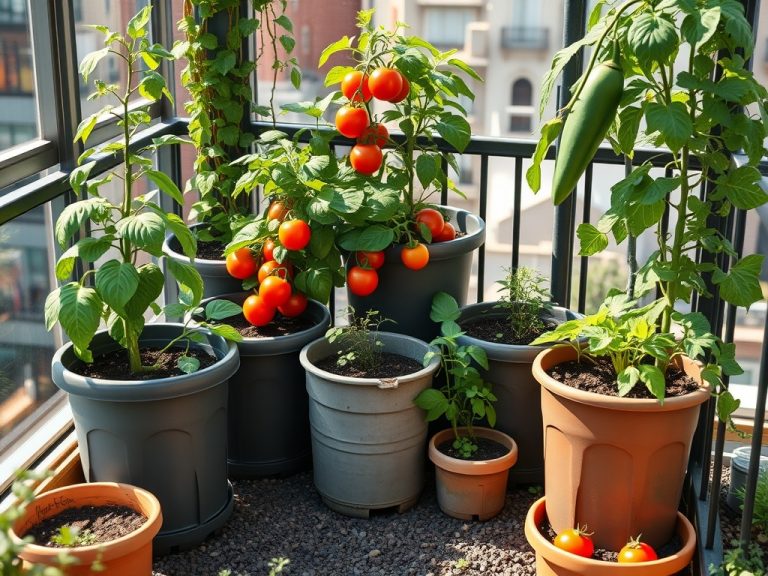
If your space is primarily a productive patio, the related guide to container vegetable gardening for patios and balconies shows how trellises and larger crop containers can provide useful vertical structure without turning every pot into a competing centerpiece.
Create Contrast Without Visual Noise
A focal point stands out because something about it differs from the background. That difference can come from color, form, texture, height, material, or empty space.
A dark-leaved plant can stand out against a pale wall. A smooth metal bowl can contrast with grasses. A vertical conifer can break a low horizontal planting. A bright glazed pot can become the visual anchor in an otherwise restrained palette.
Contrast works best when the surrounding area is quieter. If every pot has a different color and every bed edge uses a different material, the eye has no clear priority.
Use Repetition to Make the Design Feel Intentional
Repetition creates a visual connection between the focal point and the rest of the garden. Repeat one color from a container in nearby flowers. Echo a round sculpture with clipped mounds or circular stepping stones. Use the same edging material in more than one place.
Penn State’s design guidance also highlights repetition and rhythm as tools that move the eye through a garden. In a compact space, two or three repeated cues are usually enough. Repetition should support the focal point, not turn the entire garden into a matching set.
Keep Planting From Hiding the Main Feature
New gardens often look sparse, which tempts people to plant too closely. As shrubs and perennials mature, they can swallow a bench, block a sculpture, or compete with the specimen plant intended to lead the composition.
Check mature dimensions before planting. Leave negative space where it helps the main feature breathe. Use lower plants in the foreground and reserve taller material for framing where appropriate.
If turf borders the small garden, organic lawn care basics for families and pets can help keep that surrounding green area healthy without making the focal-point bed responsible for solving every landscape problem.
Design for More Than One Season
A focal point that disappears completely for half the year may be fine in a seasonal garden, but think about what remains when leaves drop or flowers fade. Containers, benches, stones, and evergreen forms provide structure when herbaceous plants are dormant.
Lighting can extend the effect after dark, but use outdoor-rated fixtures and follow local electrical requirements. Aim light at the feature rather than flooding the entire garden. Subtle lighting usually preserves more depth.
Common Focal-Point Mistakes
Using several “main” features: Pick one priority and make other elements supporting characters.
Ignoring the view from indoors: In small properties, the best garden view may be through a window for much of the year.
Choosing a feature before assessing the site: A plant that dislikes the soil or exposure will not stay attractive simply because it was intended as a centerpiece.
Oversizing hardscape: Large fountains, deep benches, and bulky planters can make a compact area harder to use.
Forgetting maintenance: A feature that requires constant cleaning, pruning, repainting, or winter storage may not suit your routine.
Build the Garden Around One Strong Decision
Choose the focal point first, test its scale, and then simplify the surroundings until the feature reads clearly from the main viewing spots. A small garden does not need more objects to feel designed. It needs a clear visual hierarchy.
This article is for general educational purposes. Plant selection, structural attachments, water features, lighting, and hardscape requirements depend on site conditions and local rules. Consult qualified professionals for structural, electrical, or code-related work.[/