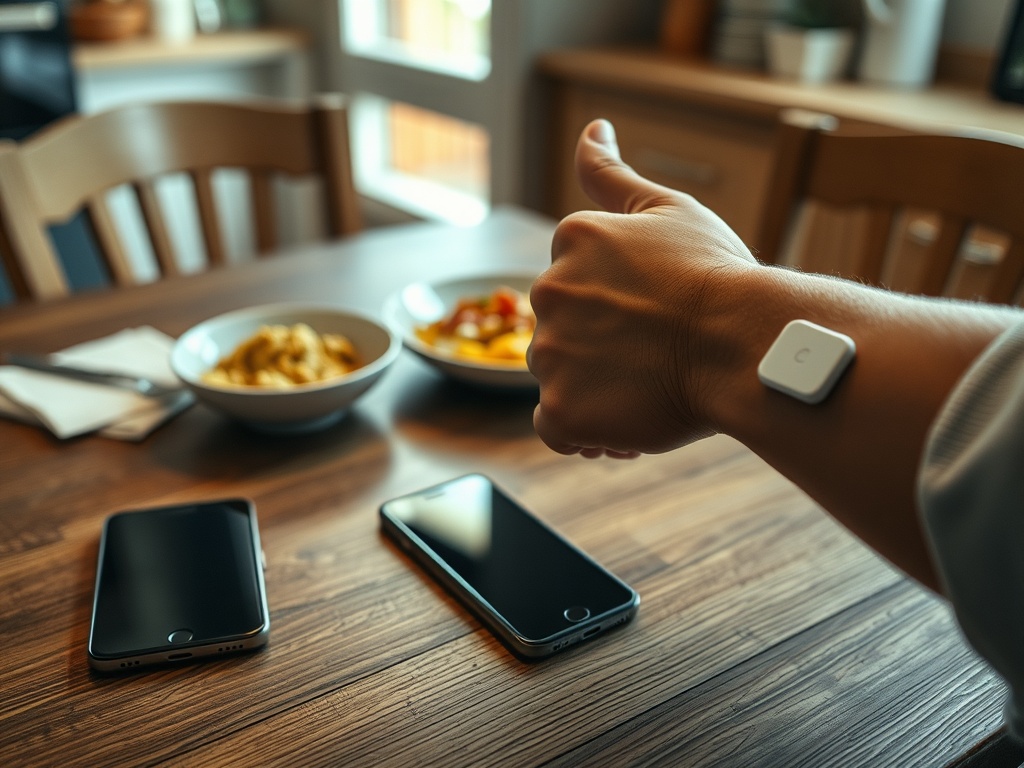

Continuous glucose data can be interesting for fitness, but it should be interpreted cautiously. For people without diabetes, it is best used as a limited pattern tool, not as a diagnosis or a rulebook for every meal.
TL;DR: Use the points below as the practical filter before you change your routine.
- Continuous glucose data can show patterns, but it should not be treated as a diagnosis or a moral score.
- For people without diabetes, fitness uses are still limited and easy to overinterpret.
- Use CGM data as one context clue alongside meals, sleep, stress, training, and medical guidance.
What CGM data can and cannot tell you
Continuous glucose monitors measure glucose in interstitial fluid and estimate trends across the day. For people with diabetes, CGMs can be clinically important tools used with medical guidance. For fitness-curious people without diabetes, the data may be interesting, but it is not the same as a diagnosis, a complete metabolic report, or a direct ranking of food quality.
Recent clinical discussion has been cautious. Mass General Brigham reported research indicating that CGM metrics reflected A1c more clearly in patients with diabetes than in people with prediabetes or without diabetes. That does not mean every non-diabetic use is worthless, but it does mean interpretation needs restraint. Read the Mass General Brigham CGM summary before treating every spike as a problem.
Why fitness users get interested
People use glucose data to explore how meals, sleep, stress, exercise, illness, alcohol, and timing may relate to glucose patterns. An endurance athlete may wonder how a long run affects fueling. A strength trainee may notice differences after late meals or poor sleep. A weight-management user may become more aware of snack patterns. Those observations can be useful, but they remain context clues.
The risk is turning normal variation into anxiety. Glucose rises after many carbohydrate-containing meals because the body is processing food. A lower spike is not always a better meal if the meal lacks nutrients, protein, fiber, or enough energy. This is why a steady nutrition framework such as balanced plate planning is more useful than chasing a perfectly flat line.
A responsible interpretation framework
First, look for repeated patterns rather than single events. Second, write down context: meal composition, timing, exercise, sleep, stress, and symptoms. Third, avoid labeling foods as good or bad based only on one reading. Fourth, do not change medication, diagnose yourself, or restrict major food groups based on consumer data. Fifth, bring concerning patterns to a qualified clinician.
Training also affects readings. A hard workout, a long walk, poor sleep, or stress can change glucose response. If you are using data around exercise, pair it with ordinary training markers such as perceived exertion, energy, recovery, and performance. The guide on what counts as exercise can help identify the activity context behind the numbers.
A myth-busting table for common claims
| Claim | Careful Interpretation |
|---|---|
| A flat glucose line means the meal was healthy | Not necessarily; nutrient quality, energy needs, and satisfaction still matter |
| A spike means the food is bad | Glucose often rises after meals; repeated context matters |
| CGMs optimize training automatically | They may provide clues, but performance, recovery, and coaching still matter |
| Healthy people need CGMs | Evidence for broad non-diabetic use is still limited |
How to avoid data overload
Set a short observation period and a narrow question. For example, ‘How do I feel after breakfast options on training days?’ is better than watching every minute with no plan. Review data once or twice daily instead of reacting all day. If the device makes you anxious, worsens food fear, or encourages unnecessary restriction, it may not be a useful tool for you.
This is especially important for people with a history of disordered eating, health anxiety, or obsessive tracking. Fitness technology should support better decisions, not shrink life into numbers. If you are unsure, discuss the device with a clinician, registered dietitian, or diabetes educator before continuing.
When the data may deserve medical follow-up
Seek medical advice if you see repeated unusual patterns, symptoms such as excessive thirst or urination, unexplained weight change, faintness, or readings that concern you. Do not use a consumer CGM to self-diagnose diabetes or hypoglycemia. Medical evaluation uses validated tests and clinical context.
For many fitness-curious users, simpler markers may be more actionable: consistent meals, regular activity, enough sleep, and sustainable habits. The article on quitting repeat goals can help if tracking keeps replacing action. The next step is to choose one question for the data, observe calmly, and make only modest changes that improve energy, training, or meal quality.
How to ask better questions of glucose data
The best CGM question is narrow and behavior-based. Instead of asking, ‘Which foods are bad?’ ask, ‘Which breakfast leaves me with steady energy for training?’ Instead of asking, ‘How do I avoid all spikes?’ ask, ‘What meal pattern helps me feel focused and satisfied?’ Better questions reduce fear and improve interpretation.
Use notes to protect against false conclusions. Record sleep, stress, exercise timing, meal ingredients, alcohol, illness, and unusual events. Without context, a number can look meaningful when it is only a response to a hard workout or short night of sleep. Patterns need repeated observations.
If data leads to stricter eating, more anxiety, or constant checking, pause the experiment. A wearable is only useful when it supports healthful behavior. It should not become a reason to distrust normal hunger, avoid social meals, or ignore professional medical advice.
A calm CGM experiment template
Pick one meal, one training context, and one review window. For example, compare two breakfasts before easy workouts for one week. Keep the rest of the routine similar. Record energy, hunger, workout feel, and glucose trend. At the end, ask which breakfast supported the morning better, not which graph looked perfect.
Avoid making permanent rules from temporary data. Travel, poor sleep, illness, stress, menstrual-cycle phase, and hard exercise can all change readings. A responsible user treats the data as a prompt for better questions, not as a judge. If a pattern appears concerning, the next step is clinical guidance, not self-diagnosis.
What to do with the insight
If a pattern seems useful, translate it into a low-risk behavior: add protein to breakfast, walk after a large meal, sleep more consistently, or time harder workouts away from meals that leave you sluggish. Avoid extreme rules such as banning entire food groups based on one graph. Fitness data should guide experiments that are safe, modest, and reversible.
If the device does not change behavior, it may only add cost and noise. A notebook, meal routine, walking plan, and regular training log may produce more useful action for many people. Responsible use means being willing to stop tracking when tracking is no longer serving the goal.
The responsible next step
A good CGM experiment ends with a practical decision, not a new obsession. Keep the behavior that improves energy or training, ignore noise that does not repeat, and bring concerning patterns to a professional who can interpret them in context.
A note on data humility
Normal bodies are dynamic, and one device never captures the full health picture. Treat humility as part of responsible tracking.