A family- and pet-conscious lawn program starts with healthy turf and careful product use, not with the assumption that anything labeled “organic” or “natural” is automatically harmless. Mowing at an appropriate height, watering efficiently, testing soil, improving compacted areas, and tolerating some weeds can reduce the need for routine pesticide use.
TL;DR: Build lawn density through correct mowing, soil-based fertility, sensible watering, and targeted repair. Treat weeds and pests only after identifying the problem. If any pesticide or fertilizer is used, read and follow the label, observe re-entry instructions, store products securely, and keep children and pets away as directed.
Start With the Meaning of “Organic”
Homeowners use “organic lawn care” to mean different things. Some mean no synthetic pesticides. Others mean using naturally derived fertilizers, accepting more plant diversity, or reducing chemical inputs overall. These approaches are not identical.
The University of Minnesota Extension’s pesticide safety guidance makes a critical point: a product described as natural or organic is not necessarily pesticide-free or risk-free. Safety depends on the specific product, dose, exposure, and label directions.
For a household with children or pets, the useful goal is risk-aware lawn care. Cultural practices should do as much of the work as possible, and any treatment should be selected for a clearly identified need.
Mow to Support Dense Turf
Taller turf can shade the soil surface, keep roots cooler, and make it harder for some weeds to establish. Mowing too short weakens many lawn grasses and can increase stress.
The University of Minnesota Extension guidance on healthy mowing recommends practices that avoid removing too much leaf tissue at once and notes that grass clippings can return nutrients and organic matter to the lawn.
The correct height depends on grass species and climate, so use local turf recommendations rather than a single national number. Keep mower blades sharp. A clean cut reduces the shredded appearance caused by dull blades.
Test Soil Before Adding Fertilizer
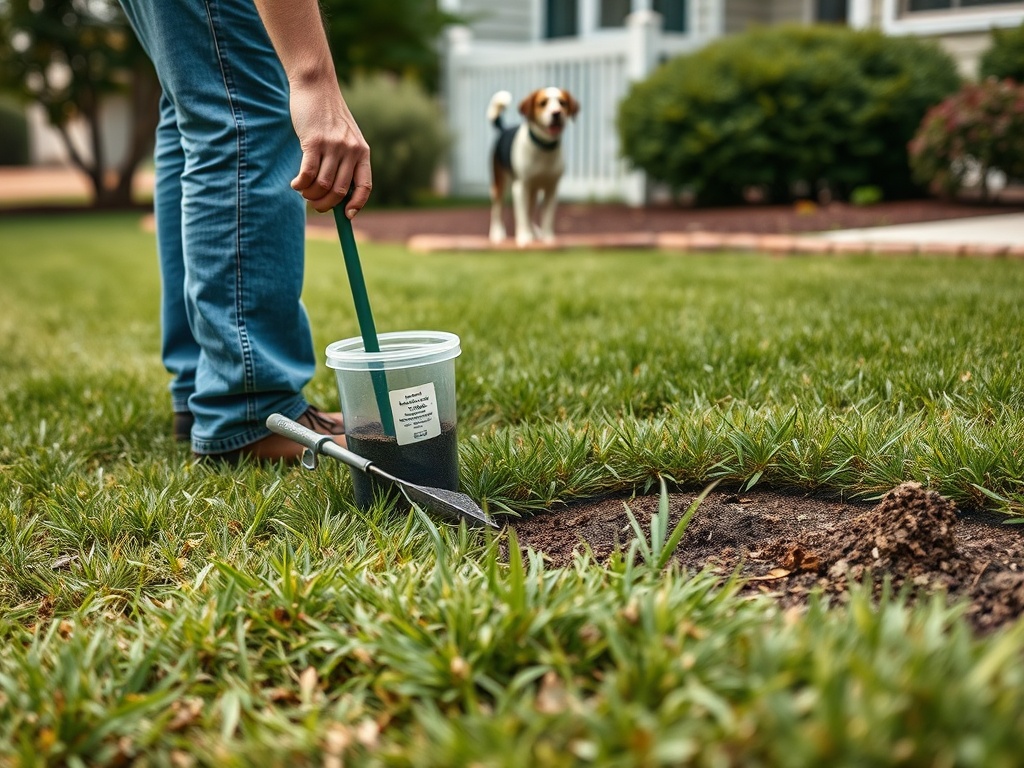
Fertilizer should correct a nutrient need, not function as a seasonal ritual. A laboratory soil test can show pH, phosphorus, potassium, organic matter, and other useful information depending on the test package.
The soil testing guidance from University of Minnesota Extension explains that soil results can help homeowners avoid unnecessary applications. Even organic fertilizers can be overused and contribute excess nutrients.
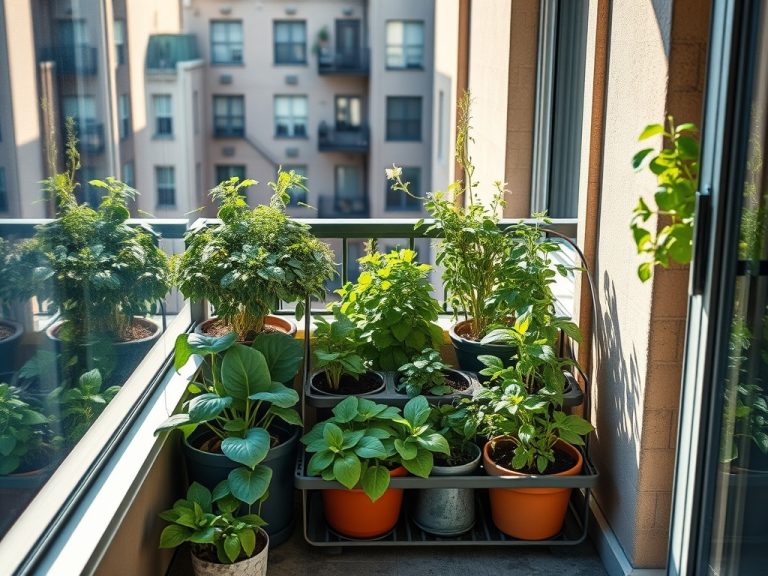
If the lawn is next to food-growing pots, the same test-before-input mindset supports better decisions. The guide to container vegetable gardening for patios and balconies explains how the smaller root zone changes fertility and watering choices.
Water Deeply Enough for the Root Zone, but Not Automatically
A lawn that receives frequent light watering may develop a shallow, stress-prone root system. Watering needs vary with grass type, soil texture, temperature, rainfall, shade, slope, and local restrictions.
Check whether the soil is actually dry before irrigating. Water early enough that foliage can dry and so evaporation is lower than during the hottest part of the day. Fix broken or misaligned sprinkler heads so water reaches turf rather than pavement.
For renters managing pots next to a lawn, container gardening for renters with limited sun uses the same principle of checking actual moisture instead of watering by habit.
Use Lawn Density as the First Weed-Control Tool
Many lawn weeds exploit thin turf, compacted soil, overwatering, drought stress, or mowing problems. Before reaching for a herbicide, ask why the weed has room to establish.
A patch of broadleaf weeds in a compacted traffic route may need aeration and turf repair. Weeds in a chronically wet spot may signal drainage or irrigation problems. A shaded lawn that repeatedly thins may be better converted to shade-tolerant planting or another surface rather than treated every year.
Hand removal can work for scattered weeds when the root or crown can be removed. For larger infestations, identify the species first. Treatment timing and control options differ by weed.
If You Use a Pesticide, Treat the Label as the Rule
No pesticide should be chosen solely because a neighbor recommended it or because the packaging uses reassuring words. Confirm that the product is labeled for the site and target pest, then follow application rates, protective equipment, storage, disposal, and re-entry directions.
Keep children and pets out of the treatment area for the period specified on the label. Store products in original containers in a locked or otherwise inaccessible location. Never transfer lawn chemicals into food or drink containers.
If a professional lawn service is involved, ask what will be applied, why it is needed, and what re-entry precautions apply. Households with pets should also ask how long animals should remain off treated areas and whether watering is required after application.
Build Pet Use Into the Lawn Plan
Dogs can create worn paths, compacted areas, and urine spots. Rather than repeatedly treating symptoms, plan for how the pet uses the yard.
Create a durable route along a fence or another common travel line. Consider a designated elimination area if urine spotting is severe. Repair compacted turf during an appropriate seeding window for your grass type. Keep pet waste picked up to reduce nutrient loading and sanitation issues.
For play areas, prioritize a surface that can tolerate traffic. A lawn may not stay perfectly uniform under active family and pet use, and that tradeoff can be reasonable.
Consider a Smaller Lawn
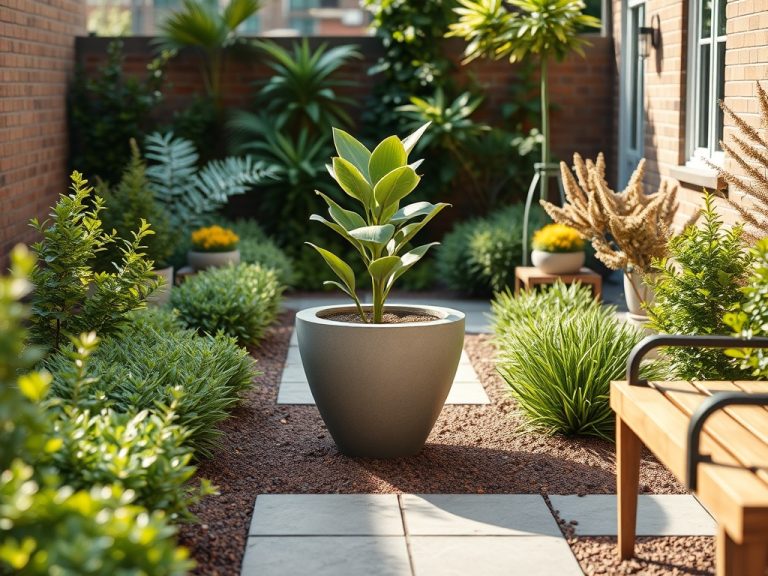
An organic approach does not require eliminating turf, but reducing lawn area can lower mowing, watering, fertilizer, and weed-control demands. Expand beds where grass consistently fails, such as deep shade, steep slopes, or narrow strips.
A small bed can also create a stronger visual structure. The article on how to create a focal point in a small garden shows how one intentional planting or feature can replace a weak patch of turf with something more useful.
Mulch Bed Edges Instead of Fighting Every Weed
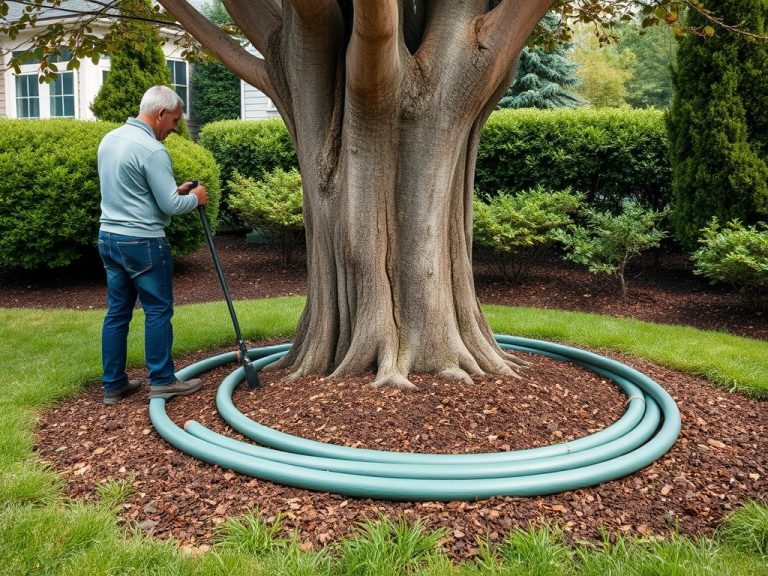
Landscape beds adjacent to lawn are easier to manage when their edges are clear and the soil surface is covered appropriately. Organic mulch can suppress many weed seedlings while moderating soil moisture. Avoid piling mulch against tree trunks or plant crowns.
Choose mulch material and depth for the specific planting. Mulch is not a permanent weed barrier, but it can reduce repeated disturbance around shrubs and beds.
A Low-Input Lawn Routine
| Task | Lower-Input Approach | Why It Helps |
|---|---|---|
| Mowing | Use species-appropriate height and sharp blades | Supports turf density and stress tolerance |
| Fertility | Base applications on soil testing and turf need | Reduces unnecessary nutrients |
| Irrigation | Water according to soil moisture and weather | Avoids routine overwatering |
| Weeds | Correct site problems and remove scattered weeds early | Reduces dependence on blanket treatments |
| Pests | Identify first, then use the least disruptive effective option | Prevents unnecessary pesticide exposure |
| Pet wear | Designate traffic or elimination areas | Concentrates damage where it can be managed |
What “Family Friendly” Should Mean in Practice
A family-friendly lawn is not defined by a label on a bag. It is a lawn managed with fewer unnecessary inputs, clear product precautions, realistic expectations, and a design that accepts how people and animals actually use the yard.
Make One Change Before Buying Another Product
Raise or correct mowing height, test the soil, repair irrigation waste, or address one compacted area before adding a new treatment. Those basic changes often reveal what the lawn truly needs and what it does not.
This article is for general educational purposes and is not pesticide, veterinary, horticultural, or legal advice. Product registrations and lawn-care rules vary by location. Always follow the pesticide or fertilizer label and consult qualified local professionals when exposure, poisoning, or regulatory questions arise.