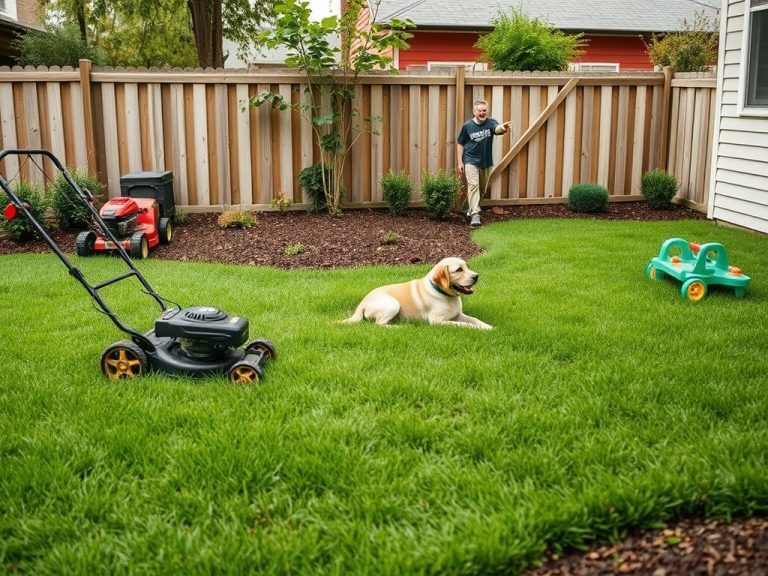
Deep watering means applying water slowly enough and broadly enough to moisten the active root zone without flooding the trunk or watering only a tiny spot. For established trees and shrubs, the useful target is the soil under and beyond much of the canopy, with frequency adjusted to soil type, weather, species, and plant age.
TL;DR: Water slowly over a broad root-zone area, keep water away from the trunk base, check how deeply moisture actually penetrates, and allow appropriate drying between irrigations. Newly planted trees and shrubs need a different schedule from established plants, so age and establishment stage should guide frequency.
Understand Where the Roots Are
A common mistake is to picture tree roots as a deep mirror image of the canopy. In reality, many absorbing roots are relatively shallow and spread laterally. That means one narrow “deep-root” spike beside the trunk may miss much of the active root system.
The University of California Statewide IPM Program’s irrigation guidance advises applying water around the drip line and root zone rather than concentrating it at the trunk of established plants. It also recommends checking actual penetration rather than assuming a long run time equals deep watering.
For shrubs, the same principle applies on a smaller scale. Spread water through the soil occupied by roots instead of pouring a large volume against the crown.
Newly Planted and Established Plants Need Different Schedules
A newly planted tree has a root system largely confined to the original root ball and the surrounding backfill. It needs more frequent monitoring while roots establish in native soil. An established tree has a much broader root system and generally benefits from less frequent, more thorough irrigation when conditions are dry.
The University of Minnesota Extension guide to watering newly planted trees and shrubs emphasizes establishment watering and mulching around the root area. Do not use an established-tree schedule on a new transplant.
If you are unsure how long a plant has been in the ground or whether roots have established, err on the side of checking soil moisture at several points rather than relying on a fixed calendar.
Pick a Delivery Method That Covers the Root Zone
| Method | Useful For | Main Caution |
|---|---|---|
| Soaker hose | Slow watering around shrubs and smaller trees | Coverage can be uneven if hose layout is poor |
| Drip emitters | Targeted low-flow irrigation | Emitters must be moved outward as plants grow |
| Hose at slow flow | Occasional deep watering | A single spot can create narrow saturation |
| Sprinkler | Broad root-zone coverage | Can waste water on pavement and wet foliage or trunks |
| Deep-root device | Specific situations and compacted surfaces | May bypass shallow absorbing roots if used too deeply or sparsely |
No method is universally best. The goal is even moisture in the root zone, not allegiance to a particular tool.
Step 1: Check Soil Moisture Before Watering
Probe the soil several inches below the surface with a screwdriver, soil probe, trowel, or narrow spade where appropriate. Surface dryness alone does not prove the deeper root zone is dry.
Check more than one location, especially around a large tree. Irrigation systems, slopes, mulch, turf, and soil texture can create wet and dry pockets.
If the soil is already moist at useful depth, delay irrigation. Chronic overwatering can reduce soil oxygen and contribute to root and crown problems.
Step 2: Place Water Away From the Trunk
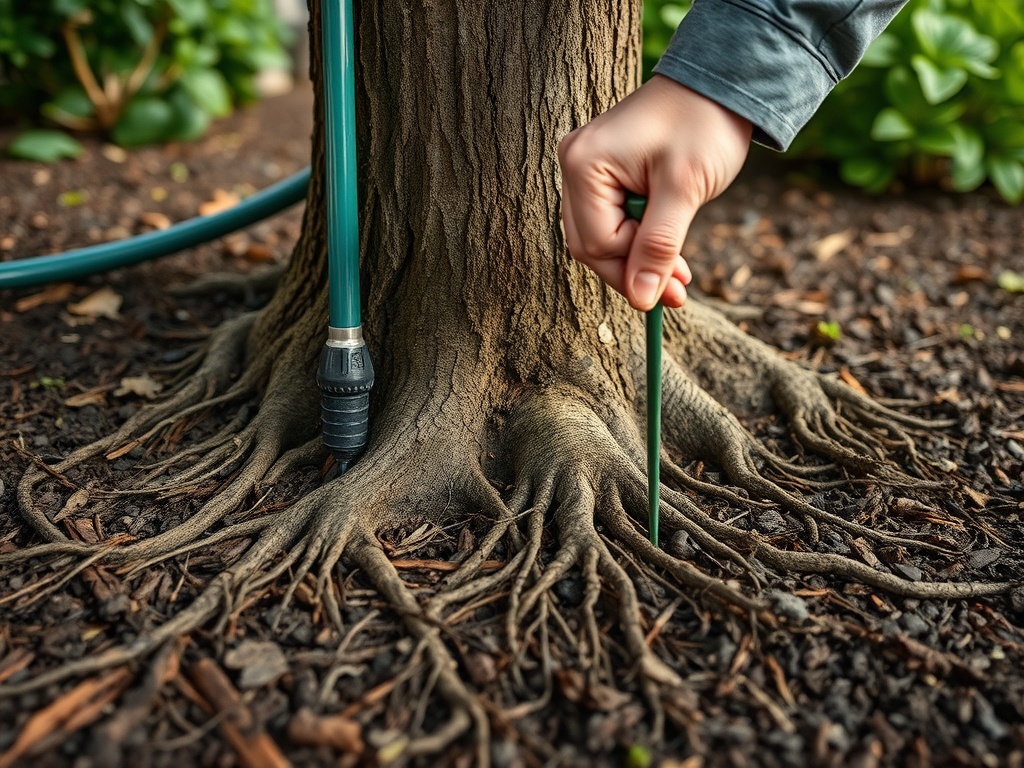
For established trees, keep emitters and hoses away from the trunk flare. The root collar should not stay constantly wet. Start farther out and distribute water under the canopy and beyond it as the plant matures.
UC IPM’s landscape watering overview recommends deep, infrequent watering for established woody plants and warns against keeping the trunk base wet.
For shrubs, place water around the root spread rather than directly against stems. A ring or looping layout with drip tubing or a soaker hose can provide broader coverage than a single emitter.
Step 3: Apply Water Slowly
Heavy clay soil may accept water slowly and can produce runoff if irrigation is applied too fast. Sandy soil accepts water quickly but may not hold it as long. Loam falls between those extremes.
If water begins running off, pause and let it soak in, then resume. This “cycle and soak” approach can help on slopes or compacted surfaces. The exact run time depends on emitter output, soil, and root-zone size, so avoid generic instructions such as “run the hose for one hour” without measuring what that hour delivers.
Step 4: Verify Penetration
After watering, use a probe or carefully dig a small inspection hole away from major roots to see how deep the moisture reached. UC IPM notes that irrigation should wet a substantial portion of the root zone and gives a general depth range for trees and shrubs, but local soil and species still matter.
The purpose of checking is calibration. If water only penetrated a few inches, increase duration or improve distribution. If the soil is saturated far below the active root zone or remains wet for long periods, reduce application.
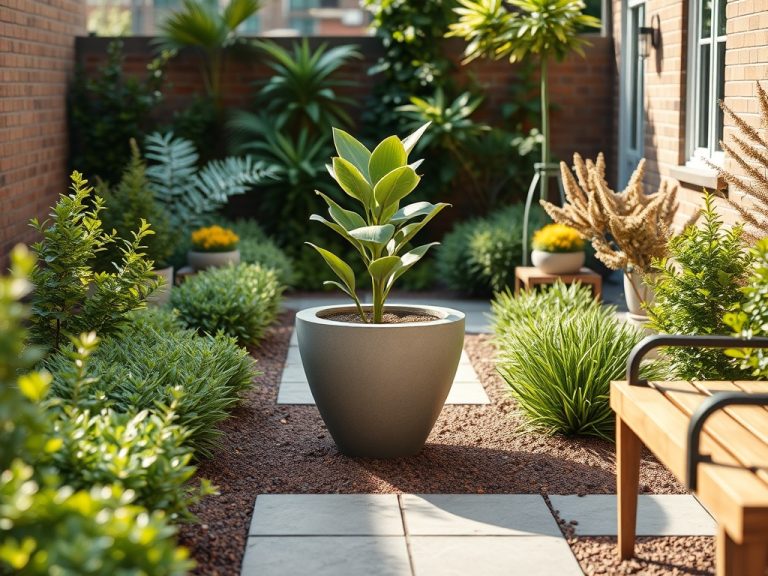
This measurement mindset is also useful in container vegetable gardening for patios and balconies, where pot size and growing medium can change watering needs dramatically.
Step 5: Adjust Frequency to Weather and Plant Condition
Hot, dry, windy conditions increase water loss. Cool weather, shade, rain, clay soil, and mulch can reduce irrigation demand. Dormant plants may use less water, although evergreen and recently planted woody plants can still need moisture during dry periods where soil is not frozen.
Do not wait for severe wilting as your only signal. Some trees show drought stress late. At the same time, do not water merely because the calendar says it is watering day.
Local water restrictions and drought guidance take priority. Use regional extension recommendations for seasonal scheduling.
Mulch Helps, but Keep It Off the Trunk
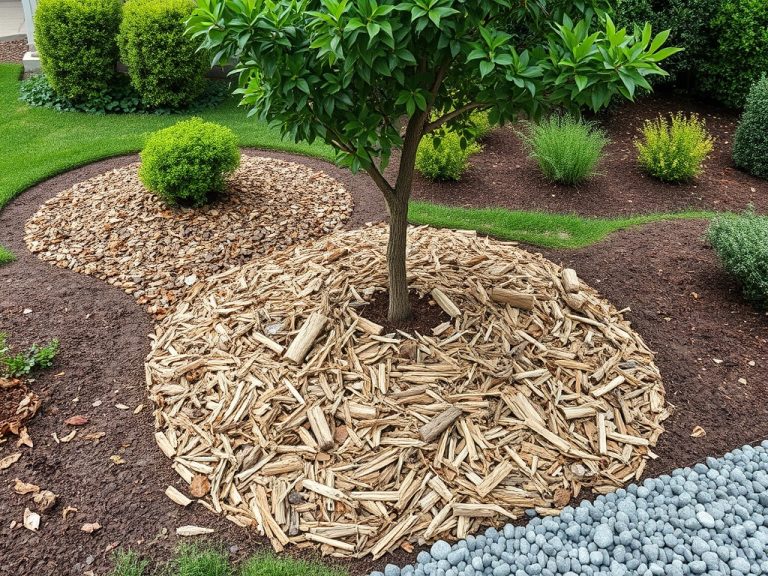
A layer of organic mulch can reduce evaporation and weed competition around trees and shrubs. Keep it in a broad, relatively flat ring rather than piling it into a “volcano” against the trunk.
Proper mulch can support irrigation efficiency, but it cannot correct poor drainage or chronic overwatering. Indoor suspended containers need a very different root-zone routine; best hanging plants for bright indoor spaces covers that separate setting.
Coordinate Irrigation With Soil and pH Conditions
Watering and soil chemistry interact. Poor drainage can keep roots oxygen-starved even if pH is suitable, while compacted soil can cause runoff that leaves deeper roots dry. Before making several changes at once, identify the limiting factor.
The Beginner’s Guide to Soil pH explains when testing is useful and why amendments should be based on evidence rather than symptoms alone.
Common Deep-Watering Mistakes
Watering at the trunk: Established absorbing roots extend outward; constant trunk moisture can contribute to disease.
Using one emitter forever: As a tree grows, the irrigated area should expand with the root system.
Confusing long duration with good coverage: A hose can run for hours and still wet only one narrow column of soil.
Watering every plant on the same schedule: Species, size, establishment stage, soil, and exposure differ.
Ignoring runoff: Water flowing down a driveway or sidewalk is not reaching the roots.
Burying a deep-water probe too far: Very deep point irrigation can miss a large share of shallow absorbing roots.
Calibrate Once, Then Keep Checking
Choose a slow delivery method, spread it across the root zone, measure penetration after the first few irrigations, and adjust frequency as weather changes. That simple feedback loop is more reliable than any universal watering timetable.
This article is for general educational purposes. Irrigation needs vary by plant species, age, soil, climate, drought status, and local water rules. Consult local extension guidance or a qualified arborist for valuable, mature, stressed, or declining trees.[/