The best reusable seed-starting supplies are durable, easy to clean, appropriately sized for seedlings, and simple to store between seasons. Sturdy plastic cell trays, solid bottom trays, rigid pots, humidity covers, plant labels, watering tools, and well-designed lighting supports can be reused for years when they are cleaned and disinfected correctly.
TL;DR: Prioritize rigid trays and pots with drainage, a leakproof bottom tray, washable labels, a controllable watering method, and a light setup that can be adjusted as seedlings grow. Reuse is only helpful when supplies can be cleaned between crops and do not force poor drainage or cramped roots.
What Makes a Seed-Starting Supply Worth Reusing
A reusable item should survive repeated wetting, handling, cleaning, and storage without cracking or becoming impossible to sanitize. It should also improve the seed-starting process rather than create extra work.
The University of Minnesota Extension guide to starting seeds indoors notes that many plastic seed-starting containers are reusable and stresses the need for drainage holes and cleaning used containers before reuse.
That makes durability only one part of the decision. A thick tray that lasts for ten years is still a poor choice if cells are too deep to water evenly, impossible to separate during transplanting, or difficult to scrub clean.
Reusable Supply Categories Compared
| Supply | Why It Is Useful | What to Look For | Reuse Concern |
|---|---|---|---|
| Rigid cell tray | Keeps seedlings separated | Sturdy walls, usable cell size, drainage | Roots and soil can lodge in corners |
| Solid bottom tray | Catches water and supports bottom watering | Leakproof construction and rigid rim | Algae and residue need cleaning |
| Individual plastic pots | Flexible for larger seedlings | Durable sides and drainage holes | Requires more storage space |
| Humidity dome | Slows moisture loss during germination | Clear rigid plastic and ventilation | Remove when no longer needed; sanitize |
| Plant labels | Tracks variety and sowing date | Washable, waterproof surface | Old marker may be hard to remove |
| Watering bottle or small can | Controls gentle moisture | Narrow spout and easy cleaning | Standing water can grow biofilm |
| Light stand or shelf | Positions lights close to seedlings | Adjustable height and stable frame | Electrical safety and storage size |
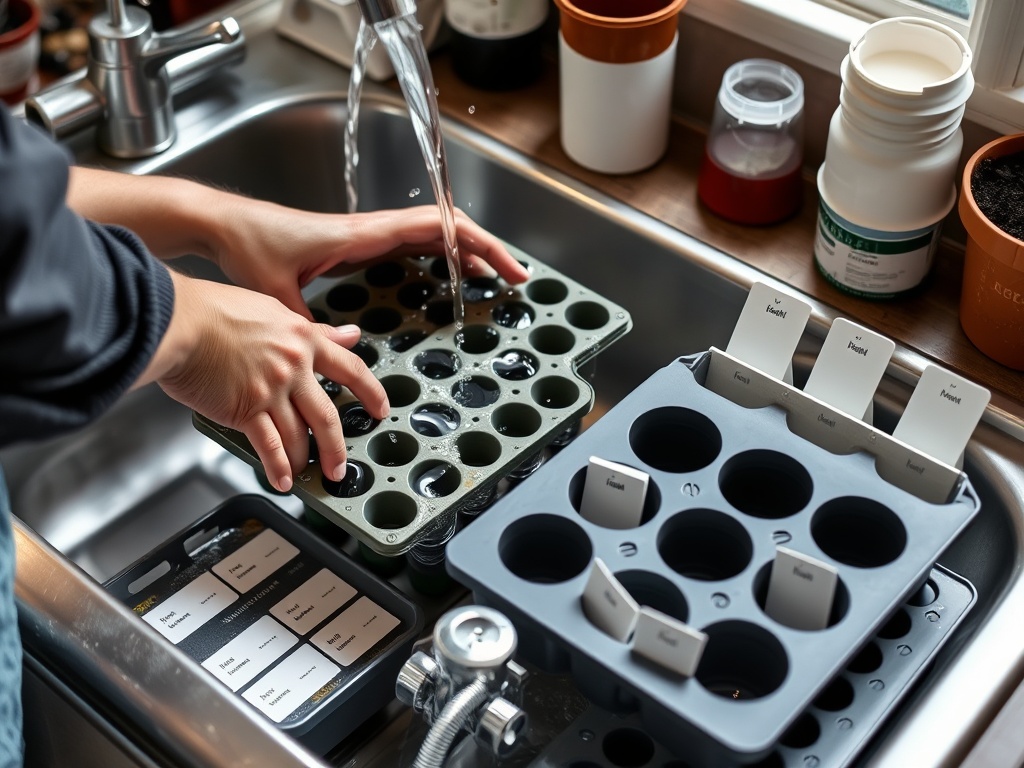
Rigid Cell Trays: Best Core Investment
Thin disposable inserts often crack when seedlings are pushed out. Heavier cell trays cost more initially but can be reused when they remain intact and can be cleaned thoroughly.
Choose cell size based on what you grow. Small cells save space for slow-growing flowers or crops transplanted young, while tomatoes and other vigorous seedlings may benefit from larger cells or potting up before transplanting.
Drainage is mandatory. A cell without a hole can stay saturated and increase disease risk. Do not rely on careful watering to compensate for a sealed container.
Solid Bottom Trays: Best for Clean Watering
A rigid waterproof tray under cell packs catches drainage and makes bottom watering possible. It also lets you move a group of seedlings without flexing the cells.
Bottom watering can reduce surface disturbance, but do not leave cell packs standing in water indefinitely. Add water, let the growing medium absorb what it needs, then remove excess according to the system you are using.
A durable bottom tray also protects shelves and floors. For renters building an indoor garden system, the reversible, surface-protecting mindset from container gardening for renters with limited sun is useful here too.
Reusable Pots: Best for Potting Up
Seedlings that outgrow their starting cells can move into rigid plastic nursery pots, small square pots, or other washable containers with drainage. Square pots use shelf space efficiently; round pots are often easier to find and clean.
Recycled food containers can work when they are made from suitable material and drainage holes are added. Iowa State University Extension’s guide to containers for starting seeds notes that many household containers can be repurposed and that reusable containers should be cleaned and sanitized between uses.
Avoid containers that held hazardous chemicals or materials that are difficult to clean. Reuse should reduce waste without introducing a contamination risk.
Humidity Domes: Useful for Germination, Not Permanent Covers
A clear dome can slow moisture loss while seeds germinate, especially in a warm indoor environment. Once seedlings emerge, prolonged high humidity and poor air circulation can encourage weak growth or disease.
Choose a rigid dome that fits the tray and can be washed. Adjustable vents are convenient but not essential if the cover can be removed promptly.
Do not treat a dome as a substitute for checking moisture. Condensation on the cover does not prove the entire growing medium is correctly watered.
Labels You Can Actually Reuse
Rigid plastic labels, metal tags, or washable plant markers can last through many seasons. The best system is one you can read easily and clean without scraping for ten minutes per label.
If permanent marker is difficult to remove, use a removable garden marker, grease pencil, or another method compatible with the label material. Keep variety and date records elsewhere as a backup if you start many seedlings.
Good labeling matters most when several cultivars look identical at the seedling stage.
Adjustable Lights and Stands
A reusable light setup can be more valuable than another tray if window light is weak. The important features are stable support, adjustability, appropriate light output, and safe electrical use around water.
Mount lights so their height can change as seedlings grow. Avoid balancing fixtures on boxes or makeshift supports that can tip into wet trays. Use listed electrical products and keep connections protected from spills.
A timer can make daily lighting more consistent. Light duration and intensity depend on the crop and fixture, so follow reliable seed-starting recommendations rather than assuming a brighter lamp can simply run longer.
Cleaning Is What Makes Reuse Work
Used trays can carry plant debris and pathogens into the next seed-starting cycle. Remove old roots and potting mix first, wash the surfaces, and then disinfect according to a reliable horticultural protocol.
University of Minnesota Extension recommends disinfecting cleaned used containers with an appropriate disinfecting solution before reuse. Iowa State Extension provides similar guidance for previously used flats, trays, and pots. Follow the disinfectant label for concentration, contact time, rinsing, ventilation, and protective equipment.
Do not reuse old seed-starting mix as if it were sterile. Fresh soilless medium reduces disease and drainage problems at a stage when seedlings are especially vulnerable.
Where Reuse Is Not Worth the Trouble
Replace cracked trays that leak or cannot support the growing medium. Discard containers that cannot be cleaned, have sharp damaged edges, or previously held unsuitable substances. Replace electrical components that show cord damage, corrosion, or unsafe connections.
Sustainability is not about keeping every object forever. It is about choosing durable items, maintaining them well, and replacing them when continued use creates a plant-health or safety problem.
If seedlings are headed outdoors, container vegetable gardening for patios and balconies explains the larger-pot watering, support, and light conditions they may face after transplanting.
Build a Small Kit You Can Use Every Year
Start with one rigid cell tray, one solid bottom tray, a few reusable pots, washable labels, a controllable watering tool, and a stable adjustable light setup if natural light is insufficient. Clean everything thoroughly after use, store it dry, and add specialty supplies only when your seed-starting routine proves you need them.
This article is for general educational purposes. Disinfectant use, electrical safety, seed-starting schedules, and plant requirements vary by product and crop. Follow product labels, seed-packet guidance, and local extension recommendations.